

































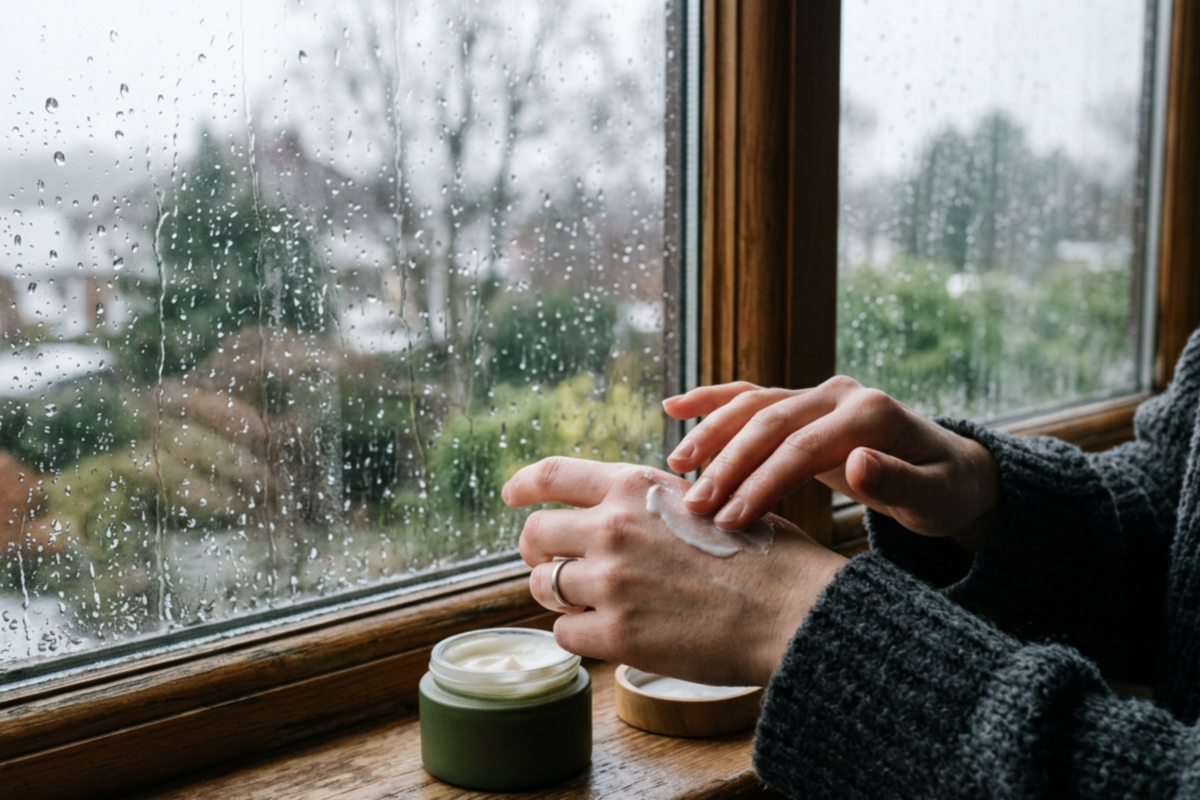
A rainy Vancouver afternoon does not seem like the obvious setting for dry skin. Yet winter can leave your face feeling tight, your hands rough, and your usual moisturizer suddenly inadequate. If you have recently had a skin treatment, you may notice these changes even more.
The rain is not the whole story. Cold air, wind, indoor heating, and changes in your daily routine can all affect how well your skin holds on to water. Damp weather outside does little to protect you from the dry air inside a heated home or office.
A gentler routine can help. Understanding what causes winter dryness, choosing an appropriate moisturizer, and adjusting your habits can make skin more comfortable. When skin is recovering from a procedure, those choices need to follow the treatment provider’s aftercare instructions, too.
Why Skin Gets Dry During a Wet Winter
The outermost layer of your skin acts as a barrier. Skin cells and the lipids between them help keep water inside while limiting contact with irritants. When that barrier is disrupted, water escapes more easily, and products that once felt comfortable may begin to sting.
Vancouver’s winter weather can contribute in several ways. Wind and cold can irritate exposed skin. Heating cold outdoor air lowers its relative humidity unless moisture is added, so a warm room may be much drier than you expect.
Moving between outdoor weather and heated indoor spaces adds to the discomfort. A windy walk followed by hours beside a heater can leave cheeks feeling tight even when the sidewalks are soaked.
Winter habits matter as well. Hotter showers, frequent handwashing, and attempts to scrub away flakes can worsen an already stressed skin barrier. Sometimes the problem is not that your skin needs another product. It needs fewer sources of irritation.
What Dry Skin Looks and Feels Like
Dry skin can look dull, rough, flaky, or scaly. Fine lines may appear more noticeable because the surface lacks moisture. On the hands, knuckles and fingertips may develop small cracks.
The feeling can be just as noticeable as the appearance. Tightness after cleansing is common. So are itching, tenderness, and a rough texture when you run your fingers over the skin.
Redness may occur, although inflammation can appear purple, gray, or darker brown on some skin tones. Visible redness is not the only sign that skin is irritated.
Dryness and irritation often overlap, but they are not always the same problem. Eczema, contact dermatitis, rosacea, and other conditions can also cause flaking or discomfort. If a patch keeps returning, becomes very itchy, or does not improve with gentle care, it deserves an assessment rather than another round of product experiments.
Make Showering Less Drying
A long, hot shower feels especially appealing after a cold commute. Your skin may feel softer while the water is running, too. Unfortunately, that comfortable feeling can be temporary.
Prolonged exposure to hot water can remove protective oils and disturb the skin barrier. After you step out, water evaporates from the surface, and skin can feel drier than it did before.
Keep the water lukewarm and the shower brief
Aim for a short shower, around five minutes when practical, using comfortably lukewarm water. You do not need to make it cold. The goal is to avoid prolonged heat and soaking.
Use a gentle, fragrance-free cleanser where needed rather than repeatedly soaping every area. Scrubbing brushes, rough washcloths, and exfoliating gloves can make dry or reactive skin feel worse.
Afterward, pat your skin gently with a towel. Rubbing until it feels completely dry adds unnecessary friction.
Moisturize while skin is still slightly damp
For ordinary dry skin, apply moisturizer promptly after bathing, while the surface is still slightly damp. This helps retain some of that water rather than allowing it to evaporate.
Use enough to cover the dry areas comfortably. A tiny dab spread over both legs may not be sufficient, particularly in winter. Hands may need another application after washing.
Recently treated skin is a separate situation. Some procedures require specific cleansing methods, approved ointments, or restrictions on bathing. Follow those instructions rather than assuming the usual damp-skin moisturizing approach is appropriate for every treatment.
Choose a Moisturizer for the Job
Moisturizers work in different ways. Some ingredients attract water, some smooth the spaces between skin cells, and others reduce water loss by forming a protective layer.
You do not need to memorize an ingredient glossary. What matters most is finding a fragrance-free product that your skin tolerates and that is substantial enough for the dryness you are experiencing.
Lotions, creams, and ointments
Lotions are generally lighter and spread easily across large areas. They may be comfortable for mild dryness, but they are not always enough when skin is very dry.
Creams are thicker and often a practical everyday choice for winter. A cream that feels slightly heavy in summer may feel just right during heating season.
Ointments, including plain petrolatum-based products, are usually the most effective at limiting water loss. They can be particularly helpful for severely dry areas such as cracked hands or rough patches. Their greasy texture is the trade-off. Applying them at night can be easier than trying to use a phone immediately afterward.
For recently treated skin, use an ointment only if it is consistent with your aftercare instructions. A product that works well on dry knuckles is not automatically suitable for every treated area.
Fragrance-free is a useful starting point
Fragrance can irritate sensitive skin or trigger allergic contact dermatitis in some people. “Unscented” does not always mean fragrance-free because a product may contain ingredients that mask its smell.
Botanical extracts and essential oils are not automatically gentler, either. When your skin is already uncomfortable, a straightforward formula often makes more sense than a complicated one.
If a moisturizer causes persistent burning, rinse it off gently and stop using it. Repeatedly pushing through discomfort is unlikely to help your skin recover.
Supporting Skin Recovery After a Treatment
Winter dryness can make recovery after a skin treatment feel more uncomfortable. Depending on the procedure, temporary redness, swelling, peeling, or sensitivity may be expected. The degree and duration vary considerably.
A superficial facial treatment does not have the same aftercare needs as a chemical peel or a resurfacing procedure. Even treatments within the same category can differ in intensity. There is no single recovery routine that fits them all.
Your treatment provider’s written instructions should guide when to wash, which moisturizer to use, and when to restart active ingredients.
Retinoids, exfoliating acids, scrubs, and some acne treatments may need to be paused. Do not choose a restart date solely because the skin looks better. The surface may appear settled before it comfortably tolerates your previous routine.
Avoid picking or pulling at peeling skin. It is tempting when flakes catch on makeup or clothing, but removing them prematurely can prolong irritation and increase the risk of discoloration or scarring.
Before a procedure, ask what level of dryness is expected, which products are approved, and whom to contact if symptoms worsen. Clear instructions are more useful than trying to interpret every sensation afterward.
Keep Sun Protection in Your Winter Routine
Cloudy weather reduces some ultraviolet exposure, but it does not eliminate it. A gray sky is not a reliable signal that sun protection is unnecessary.
UVB exposure varies with the season, time of day, and other conditions. UVB is a major cause of sunburn and contributes to skin cancer.
UVA is present throughout the year, passes through clouds, and can penetrate ordinary window glass. It reaches deeper layers of the skin and contributes to premature skin aging. Both UVA and UVB can contribute to skin cancer.
For exposed skin, choose a broad-spectrum sunscreen with SPF 30 or higher. Apply it according to the label and reapply at least every two hours while outdoors, or after swimming or sweating.
Winter activities deserve particular attention. Snow can reflect UV radiation, and higher elevations increase exposure. A cloudy day on the mountain can still mean substantial sun exposure.
After a skin treatment, ask when sunscreen can be applied safely. Until an appropriate product is permitted and tolerated, follow your provider’s advice about avoiding direct sun and using shade, hats, or other physical protection.
When Sunscreen or Skin Care Stings
Stinging after applying a new product does not automatically indicate an immune-system problem. A disrupted skin barrier can make otherwise tolerable ingredients feel uncomfortable. Irritant reactions and allergies are also possible, and they require different approaches.
The useful first step is usually to simplify.
Stop adding new products while your skin is irritated. Keep to a gentle cleanser, a tolerated moisturizer, and suitable sun protection. If you are recovering from a procedure, stay within the prescribed routine.
Some people find mineral sunscreens containing zinc oxide or titanium dioxide easier to tolerate. That is not a guarantee. Fragrance, preservatives, and other ingredients in the formula still matter.
Once skin has settled, introduce one product at a time. For intact skin, trying a small amount on a limited area for several days can help identify obvious irritation, although it cannot rule out every allergy.
Persistent burning, recurrent rashes, or difficulty tolerating basic products is a reason to consult a dermatologist.
A Simple Winter Routine You Can Maintain
An effective routine does not have to be elaborate. Consistency usually matters more than the number of products on the bathroom shelf.
For skin that is dry but otherwise intact, this is a reasonable starting point:
-
In the morning, cleanse gently if needed, apply moisturizer, and use broad-spectrum SPF 30 or higher on exposed skin.
-
During the day, moisturize your hands after washing and protect them with gloves outdoors or during wet household tasks.
-
In the evening, remove sunscreen and makeup with a gentle cleanser, then apply a cream or ointment suited to your dryness.
-
Around bathing, keep water lukewarm, limit shower time, and moisturize promptly afterward.
Your surroundings can help, too. Avoid sitting directly beside heaters or letting hot air blow onto your face. If indoor air is very dry, a humidifier may improve comfort. Keep it clean according to its instructions, and avoid making the room damp enough for condensation or mold.
Know When Dryness Needs Medical Attention
Ordinary winter dryness should gradually become more comfortable with gentle care. Seek medical advice if you develop deep or bleeding cracks, persistent itching that disrupts sleep, a spreading rash, or symptoms that do not improve.
After a procedure, contact the treatment provider promptly about increasing pain, spreading warmth or swelling, drainage, fever, or an unexpected change in skin color. These should not be dismissed as routine winter dryness.
For many people, the most helpful changes are modest: less heat, less scrubbing, and more consistent moisturizing. Vancouver’s wet winters can still be hard on the skin barrier. Giving that barrier a quieter routine, and getting advice when recovery is not going as expected, is a practical way to keep skin more comfortable.