

























A lot of discomfort does not begin with a dramatic injury. It starts quietly.
You sleep awkwardly for a few nights. You sit longer than usual. Stress creeps in and your shoulders rise toward your ears without you noticing. Maybe you twist to reach the back seat one too many times, or you go back to the gym after a break and your body answers with stiffness. None of that sounds serious on its own. But the body keeps score in small ways.
That is one reason osteopathy makes sense to so many people. It is built on a simple idea: the body works as a connected system, not as a pile of unrelated parts. When one area loses motion or carries too much tension, other areas often compensate. Over time, that compensation can feel like pain, fatigue, restriction, headaches, tight breathing, or the nagging sense that your body is working harder than it should.
Osteopathy aims to help the body move out of that pattern.
What happens when tension builds up
Tension is not always the enemy. Your body creates tension for good reasons. Muscles tighten to protect a sore area. Breathing changes when you are stressed. Joints stiffen when you avoid movement because something hurts. The problem comes when that protective response sticks around after it is no longer useful.
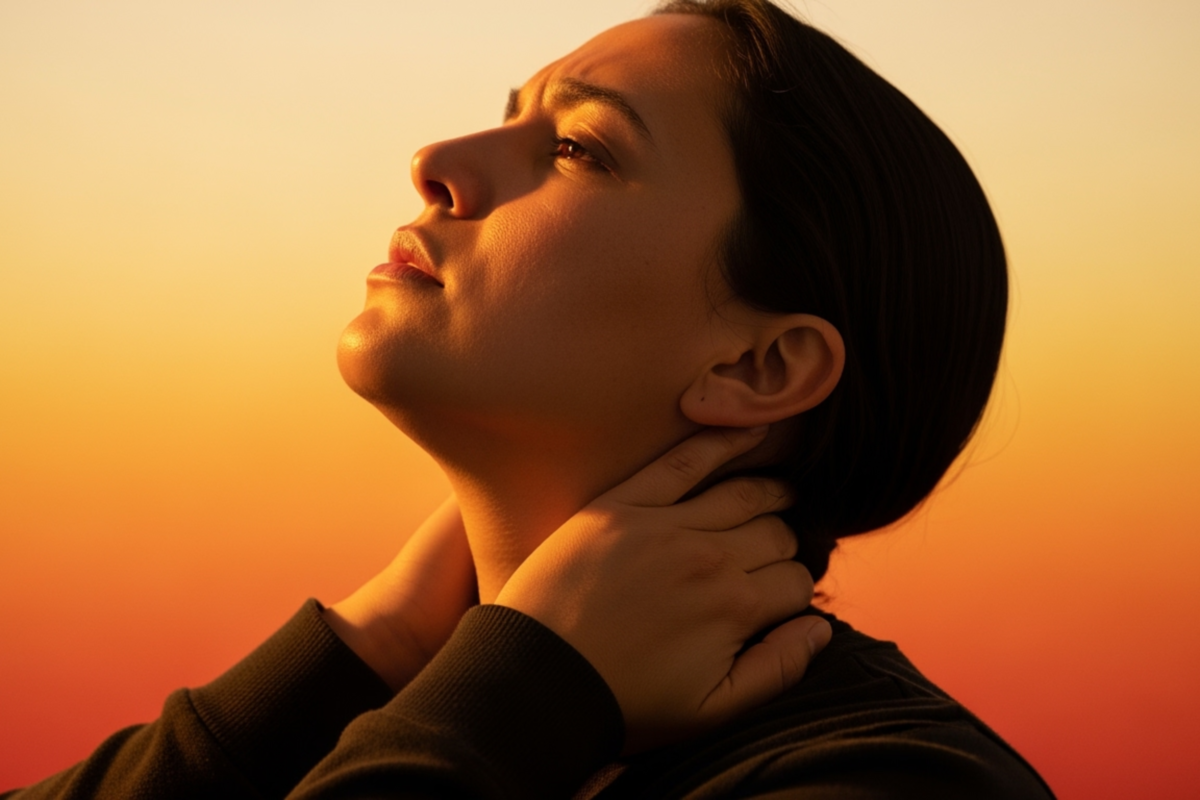
Picture a person with mild neck stiffness after a stressful week. At first, they just feel a bit tight. Then they start turning their whole torso instead of rotating the neck. Their shoulders get more involved. Their upper back works differently. They may clench their jaw more. Soon, the original issue is no longer just about the neck.
This is how a small amount of tension can turn into a bigger pattern:
-
Reduced joint motion
-
Muscle guarding and soreness
-
Changes in posture or walking
-
Shallow breathing
-
Headaches or jaw tension
-
Fatigue from constant compensation
-
A feeling of being “off” even if you cannot name why
That last one matters. Many people seek help not because the pain is unbearable, but because their body no longer feels easy to live in.
The body is good at adapting, sometimes too good
The human body is remarkably adaptable. If one area is not moving well, another area often takes over. That is useful in the short term. It lets you get through your day, finish work, pick up your child, train, commute, or sleep.
But adaptation has a cost.
If your ankle is stiff, your knee or hip may work differently. If your upper back is restricted, your neck may do extra work. If your rib cage is tense, your breathing may become shallower, and your shoulders may pick up the slack. The body can compensate for a long time before it finally asks for attention.
This is one of the most practical ways to understand osteopathy. It is less focused on chasing a single painful spot and more interested in asking, “What else is involved here?”
That question can change everything.
The osteopathic approach in plain language
Osteopathy looks at your body as one connected and integrated system. That sounds broad, but in practice it becomes very concrete. An osteopathic assessment often considers four big areas.
1. The function of every joint in the body
Joints are not only the obvious ones, like knees and shoulders. Your spine contains many joints. Your ribs move at small joints when you breathe. Your feet contain joints that affect balance, walking, and force transfer up the body.
If a joint is moving too little, nearby tissues often become tight. If a joint is moving too much because the surrounding area is unstable, that can also create strain. Osteopathy pays attention to both.
Sometimes the painful area is the problem. Sometimes it is just the area complaining the loudest.
2. The function of soft tissues, including fascia, organs, and muscles
Muscles are easier for most people to imagine. If a muscle is overworked, it becomes tender or stiff. If it is not being used well, other muscles may compensate.
Fascia is a little harder to picture, but it matters. Fascia is the connective tissue that surrounds and links muscles, bones, nerves, and organs. Think of it less as packing material and more as a web. When one part of that web becomes restricted, it can affect movement elsewhere.
Osteopathic practitioners may also consider how the tissues around the abdomen, rib cage, and pelvis move. That does not mean every symptom comes from an internal organ. It means movement, pressure, breathing, posture, and tissue tension inside the trunk can influence comfort and mobility more than many people realize.
3. How blood and lymph circulate
Healthy circulation supports tissue recovery. Blood carries oxygen and nutrients. The lymphatic system helps manage fluid balance and supports immune function.
Movement helps both systems. So does breathing. So does reducing unnecessary tension. When tissues are constantly tight and breathing is shallow, people often feel heavy, stiff, or slow to recover. Osteopathic treatment may aim to improve how the body moves so circulation can do its job more easily.
This is one reason some people leave a session feeling lighter, warmer, or less congested in a general sense, not just less sore in one spot.
4. How the nervous system responds to stress
This part is easy to underestimate.
Your nervous system is not separate from your posture, breathing, digestion, pain sensitivity, or muscle tone. When stress stays high, the body often behaves as if it must stay ready. Shoulders tighten. Jaw clenches. Breathing shortens. Sleep quality drops. Recovery slows.
Osteopathy does not erase life stress. If only it were that simple. But hands-on treatment, careful assessment, and support for easier movement can help shift the body away from a constant guarded state. Sometimes the biggest change is not a dramatic release. It is that the body stops bracing all the time.
Why hands-on treatment can feel surprisingly effective
People often ask why gentle manual work can make such a difference. The answer is not magic, and it is not mysterious.
The body relies on constant feedback. Joints, muscles, fascia, and skin all send information to the nervous system about pressure, position, stretch, and movement. Skilled manual therapy can change that input. When tissues move better and the nervous system perceives less threat, muscles may relax, breathing may deepen, and movement can become less effortful.
That does not mean one treatment “fixes” every issue. Some problems are persistent. Some need exercise, rest, strength work, ergonomic changes, or medical evaluation. But when the body has been stuck in a loop of tension and compensation, hands-on care can interrupt that loop in a way that feels immediate.
In my view, this is one of the most appealing things about osteopathy. It respects the body instead of trying to overpower it. The goal is usually not force. The goal is to help the body reorganize.
The art of natural healing, without the hype
“Natural healing” can sound vague, and sometimes people use the phrase too loosely. Here is a more grounded way to think about it.
Your body is already trying to heal and adapt all the time. It repairs tissue, manages inflammation, updates movement patterns, and tries to keep you functioning. Osteopathy does not create those abilities. It tries to support them by reducing barriers to normal movement and regulation.
That may mean helping a rib cage move more freely so breathing feels easier. It may mean reducing tension around the hips and lower back so walking no longer feels awkward. It may mean settling the neck, jaw, and upper back after months of stress.
Natural healing is not mystical. It is the practical idea that the body often does better when it is not fighting itself.
What an osteopathy session may involve
If you have never tried osteopathy, the first session is usually more about observation and assessment than people expect.
A practitioner may ask about your symptoms, medical history, work habits, injuries, exercise, digestion, stress, sleep, and daily movement. Then they may assess posture, breathing, walking, spinal mobility, joint motion, and areas of tension.
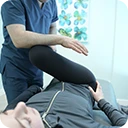
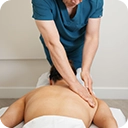
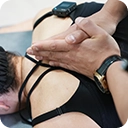
Treatment often uses gentle to moderate hands-on techniques. Depending on the practitioner and your needs, this can include soft tissue work, joint articulation, stretching, mobilization, and subtle techniques that aim to reduce restriction and calm the nervous system.
A good session should feel thoughtful, not rushed. You should understand what the practitioner is noticing and why they are working where they are working.
If you are exploring manual osteopathy services in Vancouver, it is worth looking for a practitioner who explains their process clearly and takes your full movement pattern into account, not just the place that hurts.
Who may benefit from osteopathy
Osteopathy is often used by people dealing with:
-
Neck and back tension
-
Postural strain from desk work
-
Headaches linked to muscle tension
-
Stiffness after travel or inactivity
-
Recovery after minor strain
-
General mobility restrictions
-
Stress-related muscular tightness
It can also appeal to people who are not in severe pain but feel restricted, compressed, or out of balance. That group is easy to overlook. You do not need to wait until your body is shouting.
At the same time, osteopathy is not a replacement for appropriate medical care. Severe pain, unexplained symptoms, sudden weakness, fever, chest pain, major trauma, or neurological changes need medical attention. Good practitioners know the difference between something mechanical and something that needs referral.
Why treatment often reaches beyond the sore spot
One of the most confusing parts of osteopathy for new patients is this: your shoulder hurts, but the practitioner works on your ribs, neck, and upper back first. Or your lower back is sore, and they examine your hips, feet, and breathing.
There is a reason.
Pain does not always begin where it is felt. A low back that is overworking may be reacting to stiff hips. A neck that aches every afternoon may be compensating for a rigid upper back and shallow breathing. A shoulder that keeps getting irritated may be dealing with poor rib movement or trunk rotation.
This whole-body approach can seem indirect until you feel the result. Then it makes a lot of sense.
What helps the effects last longer
Hands-on treatment can create change, but daily habits often decide whether that change sticks. The good news is that support does not need to be dramatic.
A few basics matter more than people like to admit:
-
Move often, even briefly. A short walk, a few spinal rotations, or standing up every hour can interrupt the build-up of stiffness.
-
Breathe fully sometimes on purpose. Stress has a way of shrinking breath without asking permission. Expanding the rib cage can change more than you expect.
-
Do not ignore low-grade tension for months. It usually does not disappear because you were polite about it.
-
Build strength where you need it. Mobility and stability are partners. If one is missing, the other often gets blamed unfairly.
-
Pay attention to recovery. Sleep, hydration, pacing, and stress management sound boring because they are repeated so often. They are repeated because they matter.
People seeking broader health services or wellness consultations often discover that osteopathy works best when it is part of a bigger picture that includes movement, rest, and realistic self-care.
A more useful way to think about pain and stiffness
I think many of us were taught to treat the body like a machine with isolated faulty parts. Knee hurts, fix knee. Neck hurts, stretch neck. Sometimes that works. Often it does not.
A more useful model is this: the body is a network. Tension, stress, old injuries, work habits, breathing patterns, and movement restrictions all talk to each other. Osteopathy tries to listen to that conversation.
That is why your body may respond well to it. Not because it is dramatic, but because it pays attention to how problems actually build. Slowly. Unevenly. Across more than one system at a time.
The goal is not perfection, it is easier function
Most people are not looking for a perfect body. They want to turn their head without wincing. Sit at work without their low back tightening by noon. Exercise without flaring old tension. Sleep more comfortably. Recover better. Feel more at home in their own body.
That is a reasonable goal.
Osteopathy aims to help your body return to a state where it can move, recover, and function with less strain. Sometimes the change is obvious. Sometimes it is subtle, like walking out of a session and realizing your shoulders dropped, your breath is easier, and you are no longer fighting each step.
Small shifts matter. They add up.
And when tension has been building quietly for a long time, helping the whole system settle can feel less like a luxury and more like common sense.