




























If you have ever looked at a massage menu and felt oddly intimidated, you are not alone. Swedish, deep tissue, myofascial release, trigger point work, cranio-sacral therapy, lymphatic drainage. It can sound like each option does something completely different, almost like choosing between separate medical treatments.
That is usually not how massage works.
The honest answer is simpler and, in a way, more useful: the best massage technique is often the one you enjoy, the one that helps you relax, and the one that leaves you feeling better afterward. Technique names still matter, but often as descriptions of style, pressure, pacing, and focus, not as proof that one method has a special power to physically “release” fascia, move skull bones, or break up scar tissue by hand.
That might sound less dramatic than some marketing claims. I think it is also more reassuring. You do not need a mystical explanation for massage to be helpful. Massage can reduce pain, calm the nervous system, ease stress, improve comfort, and sometimes help movement or swelling. It just tends to do that through shared body and brain mechanisms, plus the treatment context, rather than through technique-specific structural magic.
Why massage can help even when the old explanations do not hold up
A lot of massage language came from older theories that sounded concrete and easy to picture. Fascia gets “stuck.” Trigger points are “knots.” Cranial bones need to be adjusted. Organs have restricted motion that can be corrected manually.
The problem is that many of those literal explanations do not hold up well under research.
That does not mean massage is useless. It means the story we tell about why it works needs updating.
In practice, many massage techniques seem to help through a mix of overlapping factors.
Affective touch
Humans respond strongly to pleasant, safe touch. Slow, caring touch can calm the body and shift attention away from stress, vigilance, and discomfort. This is not a small thing. For many people, that soothing effect is the treatment.
Context and expectation
The room matters. The pace matters. Trust matters. So does whether you feel listened to.
A quiet space, a therapist who explains what they are doing, and a sense of safety can change how your body processes pain and tension. If that sounds obvious, good. Obvious things still matter. People sometimes chase the perfect technique and ignore the environment and relationship, when those may shape the result just as much.
Endogenous pain modulation
Your nervous system has ways to turn pain up and down. Massage may help activate those internal pain-relief processes. This does not mean pain is “all in your head.” It means pain is influenced by the nervous system, and touch can affect that system in helpful ways.
Mechanical effects
Massage is not purely psychological. Pressure, movement, and stretching of tissues can create local physical effects. These effects are real, but they are usually more modest than the grand claims attached to them. A therapist can influence tissue pressure, fluid movement, comfort with motion, and the way a body area feels. That is different from manually reshaping fascia or breaking apart scar tissue with bare hands.
Neuroplasticity
Repeated experiences can change how the nervous system responds over time. If massage consistently reduces guarding, eases pain, improves body awareness, or helps someone move with less fear, that can matter long term. One session may feel nice. A pattern of helpful sessions can change how the body reacts.
A useful rule: choose for outcome, not mythology
When people ask, “Which massage is best?” I think the better question is, “Best for what?”
Are you trying to unwind after a rough month? Sleep better? Feel less sore after training? Reduce swelling after an injury? Find tolerable pressure around a sensitive area? Those goals matter more than whether the technique comes with a dramatic explanation.
A good evidence-informed approach is to choose based on outcomes you can actually notice:
- less pain
- less anxiety
- better sleep
- less post-exercise soreness
- more comfortable movement
- reduced swelling in appropriate cases
- feeling calmer and more at ease in your body
If a technique helps you reach one of those goals, great. If the explanation sounds spectacular but the results are disappointing, the explanation does not rescue it.
Common massage techniques, without the hype
Swedish massage
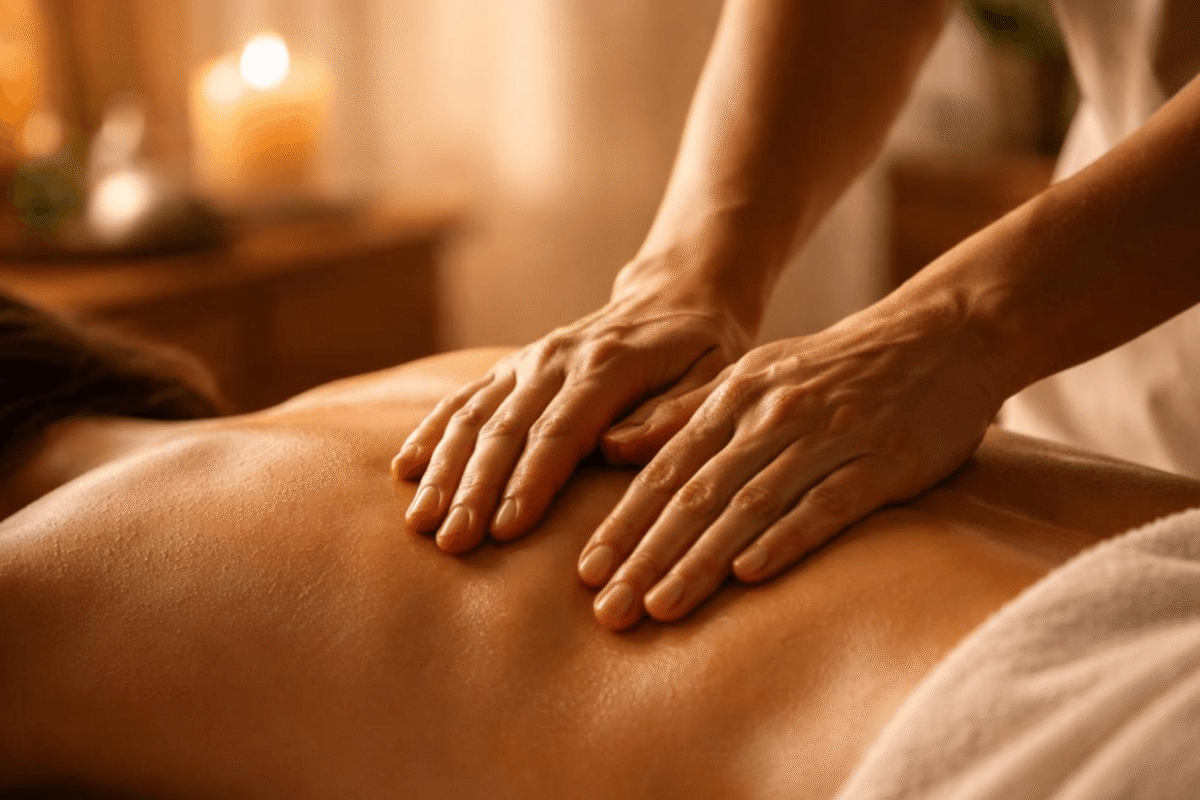
Swedish massage is the classic option many people picture first: oil or lotion, rhythmic strokes, kneading, and pressure that can range from light to fairly firm.
For a lot of people, this is the easiest place to start. It is often relaxing, predictable, and adaptable. Research and clinical experience suggest it can be helpful for stress, anxiety, headaches, sleep problems, and general relaxation. It is also commonly chosen during pregnancy when appropriate modifications are used.
What makes Swedish massage useful is not that it unlocks a hidden tissue mechanism. It is that it combines comfortable touch, soothing rhythm, and an environment that helps the nervous system settle down.
If your main goal is to relax, calm down, or ease into massage without anything too intense, Swedish massage is often a good fit.
Myofascial release
Myofascial release is often described as a way to release fascia, the connective tissue that surrounds muscles and other structures. That idea became popular because it feels intuitive. Tight tissue gets “released.” Problem solved.
The trouble is that the more literal version of that claim is hard to support. Human hands are not physically melting, lengthening, or reshaping fascia in the dramatic way the marketing sometimes suggests.
Still, people often like myofascial-style work. Why? Usually because it involves slow, sustained pressure and a focused, attentive pace that can feel deeply relieving. The benefit is more likely coming from sensory input, relaxation, changes in muscle guarding, and nervous system effects, not from fascia being manually remodeled in a mechanical sense.
So if you like this style, there is no need to avoid it. Just keep your expectations grounded.
Trigger point release
Trigger point work usually involves sustained pressure on a tender spot that may refer discomfort elsewhere. Many people have had someone press into a sore area and say, “There’s the knot.”
This is one of those ideas that persists because it matches people’s experience. We do find sore spots. Pressing them sometimes helps. But the science behind identifying trigger points by palpation is shaky, and practitioners do not reliably agree on where these points are or what they specifically represent.
That does not mean the treatment never helps. It means the explanation is less settled than the confident language suggests.
Some people love sustained pressure on tender areas and feel a clear release afterward. Others hate it and tense up more. That difference matters. If trigger point work leaves you calmer and moving better, it may be useful for you. If it feels irritating, there is no prize for enduring it.
Cranio-sacral therapy
Cranio-sacral therapy, often shortened to CST, is a very gentle approach. Traditional claims say it can detect and correct cranial rhythms or influence skull sutures in specific ways. Those structural claims are not well supported.
But here is the part worth keeping: very gentle, intentional touch can be profoundly calming for some people. Not everyone wants firm pressure. Some clients respond better to quiet, subtle treatment that feels safe and noninvasive.
If you prefer light touch and your goal is deep relaxation rather than strong tissue pressure, CST-style treatment may still be appealing. Just do not assume it is physically adjusting your skull.
Visceral manipulation
Visceral manipulation focuses on the abdomen and is often described as improving organ mobility or motility through manual treatment. Research does not give strong support for the diagnostic claims behind this approach, and there is not good evidence that a practitioner can reliably detect and correct organ restrictions by hand.
Still, abdominal massage itself can feel good. That part should not be dismissed. Gentle abdominal work may help some people feel less tense, less guarded, and more comfortable, particularly when stress and body awareness are part of the picture. Some people also report relief around low back discomfort or digestive unease.
The key is not to oversell it. Feeling better is a valid outcome. Claims about precisely restoring organ motion are another matter.
Sports massage
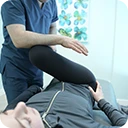
Sports massage is less a single technique and more a category. The treatment is usually tailored to the person, the sport, the training load, and the timing.
Before an event, massage is generally lighter and more activating. The goal is not to leave the athlete limp and sleepy. After an event, treatment may be more calming and recovery-focused.
Research suggests sports massage does not meaningfully boost performance. That is worth saying plainly. It is not a shortcut to speed, strength, or power. But it may slightly improve flexibility and may help reduce or prevent delayed onset muscle soreness for some people.
For active people, that is still useful. Just frame it properly. Sports massage can support comfort and recovery. It is not a performance supercharger.
Manual lymphatic drainage
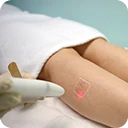
Manual lymphatic drainage, or MLD, uses very light, rhythmic strokes intended to encourage fluid movement. It is gentler than many people expect.
This is one area where the details matter. There is some evidence that lymphatic techniques may help reduce edema in certain situations, such as after specific injuries like ankle sprain or wrist fracture. Some studies also suggest effects on markers related to muscle damage, though the overall evidence base is still limited and needs more high-quality trials.
Where people should be cautious is the cosmetic sales pitch. Claims that MLD melts cellulite, sculpts the jawline, or dramatically changes body shape do not have solid support. For swelling in the right context, gentle lymphatic-style work may help. For beauty myths dressed up as anatomy, skepticism is reasonable.
Deep tissue massage
Deep tissue massage is one of the most requested and most misunderstood terms in massage. Many people use it to mean “firm pressure.” That is usually what it amounts to.
It is not always a standardized technique with one exact method. One therapist’s deep tissue session may feel very different from another’s. The real issue is whether the pressure suits your preferences and goals.
More pressure is not automatically better. This is where people get tripped up. Some leave a massage thinking pain proves effectiveness. Sometimes it just proves the pressure was too much.
If you like firm work and it helps you feel looser or more comfortable, fine. If you brace against it the whole time, that is useful information too.
Scar tissue massage
Scar tissue massage is commonly described as breaking up scar tissue or adhesions. That claim is usually too literal. Massage is not smashing apart scar tissue by force.
But scar-focused treatment can still help. It may improve comfort, sensitivity, movement confidence, and the way an area feels during daily activity. Some of that may come from gradual tissue adaptation. Some may come from changes in how the nervous system interprets touch and movement in a previously injured area.
That may sound less dramatic than “breaking up scar tissue,” but it is a more realistic and, frankly, more respectful explanation.
So how do you choose?
A practical choice often comes down to three things: your goal, your pressure preference, and how your body responds afterward.
If you want general relaxation, Swedish massage or other calming styles are often a good place to begin.
If you prefer slow sustained pressure, you may like myofascial-style work.
If you enjoy focused pressure on sore spots, trigger point techniques may be worth trying, as long as they do not leave you more irritated.
If very gentle treatment feels safer or more appealing, cranio-sacral style work may suit you.
If you are training hard and want help with soreness or recovery routines, sports massage may make sense.
If swelling is part of the issue and you have been appropriately assessed, lymphatic work may be worth discussing.
And if what you really mean is “I like firm pressure,” ask for that directly instead of assuming “deep tissue” guarantees the right experience.
What to tell your massage therapist
A short honest conversation before treatment can make a bigger difference than choosing the perfect label from a menu.
Tell them:
- what you want from the session
- how much pressure you like
- what areas you want treated or avoided
- whether you want quiet or more explanation
- how you want to feel afterward: sleepy, calm, looser, less sore, more comfortable moving
That is not high-maintenance. That is useful. Massage tends to work better when it matches your goals.
If a therapist explains the treatment in realistic, evidence-informed terms, that is a good sign. If the explanation depends on dramatic structural claims that sound impossible to verify, pause and ask questions.
A few expectations worth keeping realistic
Massage can help a lot. It can also be oversold.
A good session may reduce pain, ease stress, improve comfort, and help you feel more at home in your body. It may support flexibility, decrease soreness, or reduce swelling in the right circumstances. It may improve your day. Sometimes that is enough.
What massage usually does not do is permanently realign everything, erase injuries, or produce magical structural change because of one named technique.
That is not a disappointing conclusion. I think it is a freeing one. You can stop chasing the “correct” buzzword and focus on what actually helps you.
The bottom line
The best massage technique is rarely the one with the boldest theory. It is usually the one that feels safe, suits your preferences, matches your goals, and leaves you measurably better afterward.
Technique names still have value. They help describe style, pressure, and focus. But most massage benefits seem to come from shared mechanisms: calming touch, a supportive treatment setting, the body’s own pain-relief systems, modest physical effects, and changes in the nervous system over time.
So choose based on experience, not mythology. Pay attention to how you feel after the session. Work with a therapist you trust. Speak up about pressure and preferences. That combination often matters more than the label on the treatment menu.