

































Laser hair removal pricing can be surprisingly difficult to compare. One Vancouver clinic advertises a low starting price, another lists six-session packages, and a third asks you to book a consultation before providing a quote. Even familiar labels such as “full legs” or “full body” may describe different amounts of treatment coverage.
The most useful number is the estimated total cost of treating the areas you want, with a suitable provider and clear terms for any prepaid sessions. A low single-session rate tells you only part of that story.
This guide explains how treatment areas affect pricing, what package discounts mean, and which questions can help you build a realistic budget. Any calculation below is hypothetical, not a current clinic quote or a Vancouver market average.
What Does Laser Hair Removal Pricing Actually Cover?
Most quotes begin with the treatment area. A small area generally takes less time than a large one, although hair density, treatment settings, and the equipment used can also affect appointment length.
The price also supports work that happens around the treatment itself: assessing suitability, reviewing relevant medical history, preparing the skin, following safety procedures, and explaining aftercare. Equipment maintenance, staffing, and premises costs contribute to the clinic’s expenses.
That does not mean the highest price guarantees the best care. It means two prices are worth comparing only when you know what each includes.
A useful quote should identify the treatment area, the number of sessions, and any conditions attached to the price. Ask whether the consultation or test spot has a separate fee, whether applicable taxes are included, and whether additional sessions follow the same rate.
How Treatment Areas Affect the Price
Clinics often organize their menus into small, medium, large, and extra-large areas. These categories make price lists easier to scan, but they are not standardized.
Small areas
Small-area treatments may include the upper lip, chin, fingers, toes, stomach line, or a limited bikini line. Some clinics also place areas such as the neck, knees, or areolas in this category.
Pay attention to boundaries. A chin treatment may exclude the upper lip and neck. A bikini-line treatment may cover only hair outside a particular underwear line, rather than the wider area you had in mind.
When a label leaves room for interpretation, ask the practitioner to describe or demonstrate the coverage during the consultation.
Medium areas
Underarms, lower arms, shoulders, inner thighs, and the lower back may appear in a medium-area category.
Again, definitions matter. “Lower arms” might include the elbows but exclude the hands. A shoulder treatment may stop before the upper back. Treating adjacent areas can change the total price, even when the added patch seems small.
Large and extra-large areas
Larger categories commonly include the chest, abdomen, upper back, lower legs, upper legs, full arms, full legs, and full back. Where each area sits on a clinic’s menu varies.
A “full face” treatment deserves particular clarification. Ask which facial areas are included and which are excluded for safety or suitability reasons. Treatment near the eyes requires particular caution and appropriate protection.
For full legs or full arms, check whether feet, toes, hands, and fingers are part of the quoted coverage. These details can explain why one apparently comparable quote costs more than another.
Why “Full Body” Needs a Clear Definition
“Full body” sounds comprehensive. It is still a package label, not a universal treatment specification.
A plan may include arms, legs, underarms, and selected torso areas while excluding the face or intimate areas. Another may have a different combination. Brazilian treatment definitions can vary too, so confirm exactly which areas are included and whether any requested areas cost extra.
Some price menus use gender-based categories. Ask how the clinic determines the price for your actual treatment needs, including coverage, hair density, and appointment time. You should be able to discuss those needs respectfully without having to guess which menu applies.
Request the coverage in writing before buying. A verbal description is easy to misunderstand, especially when you are comparing several clinics.
Per-Session Pricing Versus Package Pricing
Paying per session usually gives you more financial flexibility. You commit less money upfront and can reassess before purchasing another appointment.
A package generally trades some of that flexibility for a lower effective session rate. The discount may be worthwhile, but only if you can use the sessions and the treatment remains appropriate for you.
Here is a hypothetical calculation:
Payment optionCalculationTotalSix individual sessions$100 × 6$600Six-session package at 20% off$600 × 0.80$480Difference$600 − $480$120
The package’s effective rate is $80 per session. That is useful information, but it is not enough to decide whether to buy.
If the package expires before you can reasonably complete treatment, some of the savings may disappear. If you stop after a few appointments and unused sessions are nonrefundable, paying individually might have cost less.
Compare the final amount payable rather than the largest advertised discount. Promotions may exclude certain areas, apply only to new clients, or prevent you from combining offers.
Six Sessions Are a Purchase Quantity, Not a Guaranteed Result
A six-session package tells you how many appointments you are buying. It does not establish how many treatments your hair will need.
Laser hair removal works by targeting pigment in hair follicles. Hair grows in cycles, and follicles are not all equally responsive at the same appointment. Repeated treatment is needed to address hair as it enters a suitable growth phase.
Results depend on the treatment area, hair color and thickness, skin characteristics, hormonal influences, device, and treatment settings. Blond, red, gray, and white hair generally responds poorly because it contains less of the pigment the laser targets.
The realistic goal is long-term hair reduction. Complete, permanent removal of every hair should not be promised. Some people need additional sessions or later maintenance.
Ask for a provisional treatment estimate and when it will be reviewed. An honest provider may give you a range rather than an exact endpoint. That uncertainty is frustrating when you are budgeting, but a precise promise would not necessarily be more reliable.
Build a Budget Beyond the Initial Package
Start with the areas you want treated and the expected initial course. Then consider the possibility of additional sessions.
For another hypothetical example, imagine a six-session package costs $480 and subsequent treatments cost $100 each. If you need two more sessions, your treatment spending becomes $680, before any other applicable charges.
That does not make the package poor value. It shows why the package price and the likely total are different numbers.
Ask whether follow-up appointments use the regular single-session rate or a separate maintenance rate. Also clarify whether a discounted follow-up price has a time limit.
Practical costs matter too. Travel, parking, and time away from work can add up across repeated visits. A slightly cheaper appointment across the city may be less economical if getting there is difficult.
A manageable schedule is part of value. You need to be able to attend appointments at intervals appropriate for the treatment area and your response.
Why Vancouver Clinics May Quote Different Prices
Commercial rent and other operating costs vary across Vancouver. A downtown address may come with higher overhead, but location alone cannot explain treatment quality or justify a particular price.
Equipment purchase and maintenance, staffing costs, appointment length, and practitioner training can all influence what a clinic charges. Treatment coverage and hair density may affect the quote as well.
Technology deserves a closer look. Laser devices differ, and intense pulsed light, usually called IPL, is not a laser. Both may be used for hair reduction, but their suitability and performance depend on the device, settings, and person receiving treatment.
Ask which device will be used and why it is appropriate for your skin and hair. A machine’s brand name is not a substitute for an individualized assessment.
Experience matters especially when treating darker skin tones, where inappropriate equipment or settings can increase the risk of burns and pigment changes. Ask about the practitioner’s training and experience with skin like yours.
What to Check Before Paying Upfront
Package terms can affect the value as much as the discount. Before purchasing, get clear answers to these questions:
-
What exact areas are included, and are any adjacent areas excluded?
-
How many sessions are included, and what do additional sessions cost?
-
Is there an expiration date, and can it reasonably accommodate the recommended treatment schedule?
-
What happens if treatment must pause because of pregnancy, medication changes, sun exposure, or another suitability concern?
-
Are unused sessions refundable or transferable, and what are the cancellation and missed-appointment rules?
-
Are there eligibility restrictions, excluded treatments, or separate charges?
Do not assume a pause automatically extends a package. Policies differ, and a medically appropriate delay may still create a financial issue unless the terms address it.
Keep a copy of the written quote and package conditions. If a promotion is part of the offer, save its terms too.
Safety Belongs in the Price Comparison
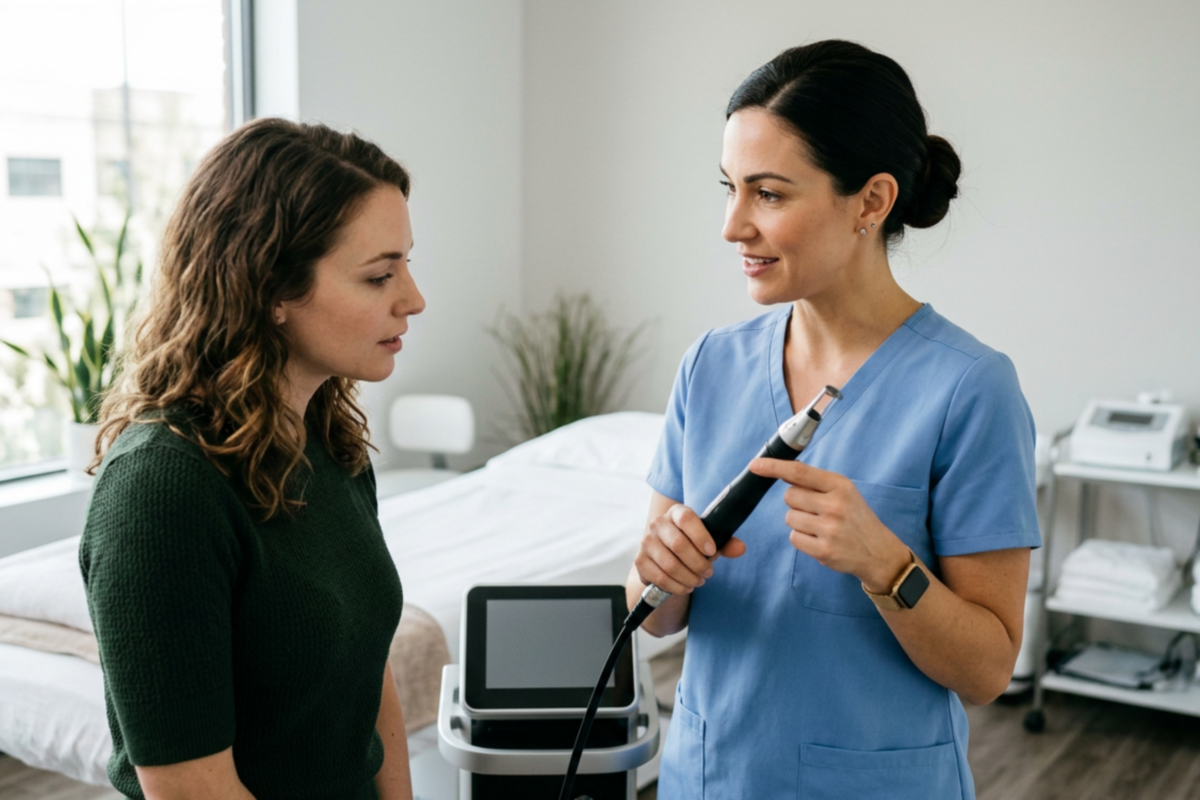
A consultation should give you room to discuss more than cost. The practitioner should ask about relevant health conditions, medications, previous reactions, recent tanning, and your treatment goals.
You should receive preparation and aftercare instructions that fit the treatment. These commonly address sun exposure and avoiding hair removal methods that pull hair out at the root before treatment. Follow the provider’s specific directions rather than relying on a generic online schedule.
Laser hair removal can cause temporary redness and swelling. Burns, pigment changes, and other complications are possible. Ask how the clinic reduces these risks and what support is available if you have an unexpected reaction.
If a consultation feels rushed or questions about safety receive vague answers, a discount is not a good reason to proceed. You should understand what is being proposed before paying.
Compare the Same Plan, Not Just the Same Label
The simplest way to compare quotes is to write down the same information for each clinic: exact coverage, device, practitioner qualifications, expected initial session count, package total, extra-session pricing, and purchase conditions.
Then consider whether the plan fits your priorities. Someone treating a small area for the first time may prefer the flexibility of individual sessions. Someone with an established treatment plan may reasonably choose a package with clear terms and useful savings.
The better purchase is the one you understand. Before committing to laser hair removal in Vancouver, make sure you can explain what your money buys, what it does not cover, and what might increase the final cost. That clarity is worth more than a low starting price.