















Choosing a skin rejuvenation treatment can feel surprisingly complicated. A traditional facial, an exfoliating device, microneedling, and a laser appointment may all promise smoother-looking skin, yet they work differently and involve different levels of recovery.
The best starting point is your main concern. Dryness that makes fine lines more noticeable calls for a different approach than acne scarring, sun spots, or a loss of firmness. A relaxing facial can be worthwhile, but it should not come with the expectation that it will lift sagging skin.
For anyone comparing skin rejuvenation options in Vancouver, understanding these differences makes consultations more useful. It also helps you spend your time and money on treatment that fits your skin rather than a persuasive treatment name.
Start With the Change You Want to See
“Rejuvenation” is a broad term. It can describe temporary improvements in hydration and radiance or procedures intended to remodel collagen over several months.
Try to identify the concern that bothers you most. Does your skin feel rough? Are dark spots the main issue? Do fine lines become less noticeable after moisturizing, or do they remain? These observations help guide an assessment, although they do not replace one.
Expectations matter, too. Pores can become less noticeable, but treatments cannot permanently close them. Hydration may soften the appearance of fine lines without changing deeper wrinkles. Nonsurgical treatments may improve mild laxity, but they do not produce the same result as surgery.
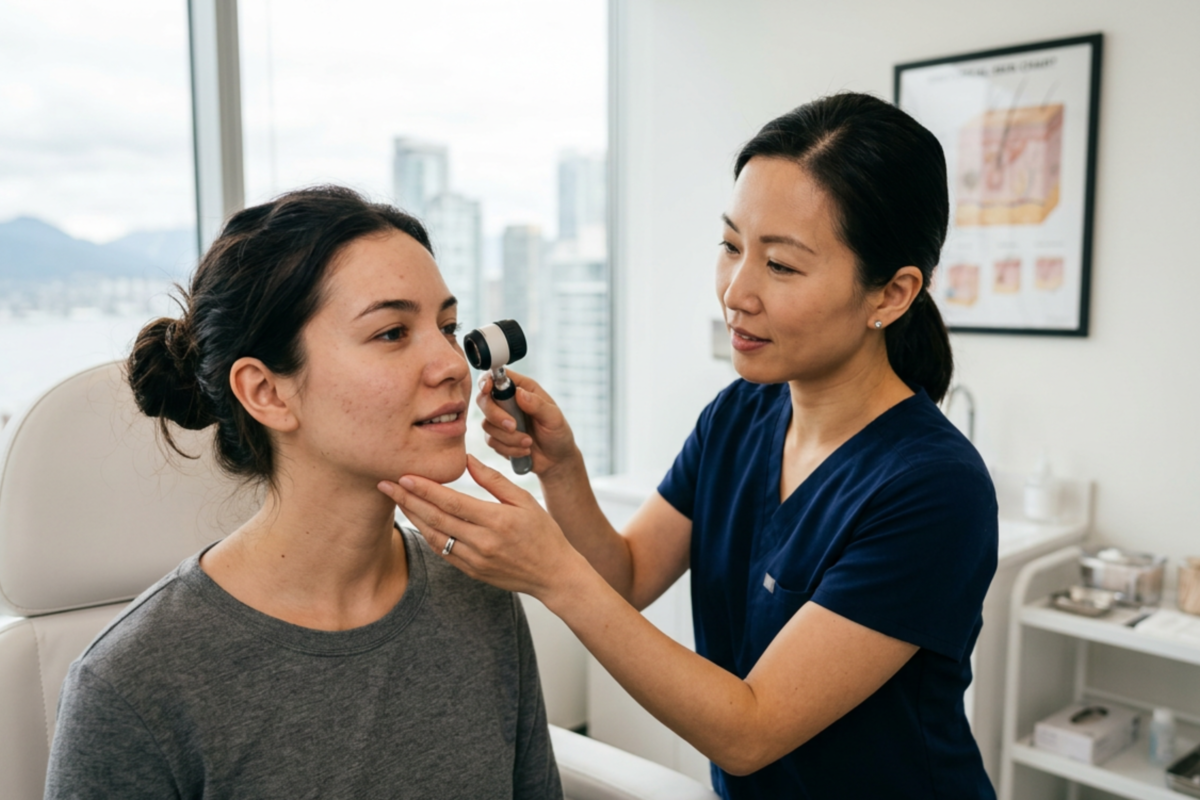
A useful consultation should explain what a treatment can reasonably change, what it probably cannot change, and whether a simpler option would be enough.
Traditional and Customized Facials
A traditional facial usually includes cleansing, selected skin care products, and massage. Depending on the service, it may also include steam, extractions, an exfoliant, or a mask.
These treatments are often a comfortable starting point for people seeking skin maintenance, temporary hydration, or a relaxing appointment with limited downtime.
What a facial can reasonably do
A well-chosen facial can remove surface buildup, improve hydration, and leave skin feeling smoother. Gentle extractions may help with certain blackheads and clogged pores.
The effects are usually modest and temporary. Facial massage may change how the skin looks immediately afterward, but that is different from lasting tissue tightening.
Customization is valuable when it changes the treatment to suit your skin. Someone with dryness and sensitivity may need gentle cleansing and barrier-supporting products. Someone with congestion may benefit from carefully selected exfoliation. An elaborate treatment is not automatically a better treatment.
Steam, fragrance, vigorous massage, and strong exfoliants can aggravate some skin conditions. If your skin burns easily or you have rosacea, eczema, or inflamed acne, mention it before the appointment.
Where facials have limits
Facials are not a substitute for medical acne treatment when breakouts are deep, painful, persistent, or causing scars. Aggressive extraction can worsen inflammation and increase the risk of marks.
Likewise, a facial that leaves skin temporarily plump should not be described as a durable solution for sagging.
Device-Assisted Facials: What the Equipment Adds
Device-based facials cover several technologies. The presence of a machine tells you little about the likely result unless you know what it does.
Hydradermabrasion and microdermabrasion
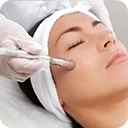
Hydradermabrasion-style treatments combine device-assisted cleansing and exfoliation with fluid or topical product delivery. Some use suction to remove pore debris without manual squeezing.
Microdermabrasion mechanically exfoliates the outermost skin layer. It may improve superficial roughness and dullness, but it is not equivalent to deeper resurfacing and is unlikely to substantially improve deep scars or pronounced wrinkles.
Both approaches can irritate reactive skin. Suction strength, exfoliation intensity, and product selection should be adjusted to the individual. More aggressive treatment does not necessarily mean a better outcome.
LED, microcurrent, ultrasound, and oxygen treatments
LED treatments use selected wavelengths of light. Some devices may help with inflammatory acne or provide modest improvements in signs of aging, depending on their specifications and treatment schedule. Results vary, and protective eyewear may be needed.
Microcurrent treatments use low-level electrical currents. They are often marketed for facial toning, but evidence for substantial, lasting lifting is limited. Any improvement may be subtle or temporary.
Ultrasonic cleansing tools should not be confused with focused ultrasound devices intended to heat deeper tissue. They have different purposes and risk profiles.
Oxygen facials commonly combine equipment with topical products. The products may hydrate the skin, but claims that oxygen delivery itself produces lasting rejuvenation deserve careful scrutiny.
The practical question is simple: what benefit does this particular device add for your concern?
Microneedling: A Gradual Approach to Texture
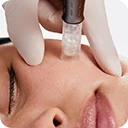
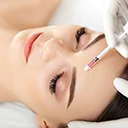
Microneedling creates controlled punctures in the skin to trigger a wound-healing response. Over time, this can support collagen remodeling.
It may be considered for certain acne scars, uneven texture, and fine lines. It is better understood as a gradual remodeling treatment than an instant facial refresh.
Results depend on needle depth, technique, the condition being treated, and your skin’s response. A course of sessions is often recommended, with time between appointments for healing.
Redness, tenderness, and swelling are common after treatment. Infection, pigment changes, and scarring are possible, particularly when treatment selection, hygiene, or aftercare is poor.
Active infection, inflamed acne in the treatment area, a tendency toward abnormal scarring, and certain medications can affect suitability. Home rollers are not an equivalent substitute for professionally assessed treatment.
Radiofrequency microneedling adds heat through specialized needles. It is a different procedure with additional risks, including burns and unwanted tissue injury. Ask which treatment is being proposed rather than assuming all microneedling is interchangeable.
Lasers and IPL: Similar Appointment Settings, Different Treatments
Light-based treatments can target pigment, visible blood vessels, or water within the skin. The target determines which concerns a device may address.
Nonablative laser treatments
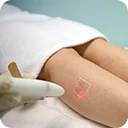
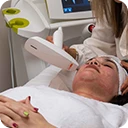
Nonablative lasers heat selected tissue without removing the entire skin surface. Some are used to improve redness, fine lines, or texture, depending on the device and settings.
Laser Genesis is a name associated with a type of nonablative laser treatment. The name alone does not establish whether it suits your skin. Ask what concern the provider intends to treat and what improvement is realistic.
These procedures often involve a series of appointments. Less recovery time can mean a more gradual or modest result compared with more intensive resurfacing.
Laser resurfacing
Ablative resurfacing removes controlled amounts of skin tissue. Fractional systems treat microscopic zones while leaving surrounding areas intact; fractional devices may be ablative or nonablative.
Resurfacing can address selected wrinkles, scars, and texture concerns, but intensity matters. More intensive treatment generally involves more recovery and a higher risk of complications.
An assessment should cover infection risk, pigment changes, scarring, medications, and any history of cold sores. People prone to cold sores may need preventive medication for certain procedures.
Intense pulsed light
Intense pulsed light, or IPL, is not a laser. It delivers a range of wavelengths through filters and may be used for selected brown spots or visible redness.
Some IPL devices are also used for hair reduction, but a photofacial is not automatically a hair-removal treatment. Laser hair removal uses different treatment planning and should be discussed as a separate goal.
Recent tanning and skin tone influence the safety of light-based procedures. Darker skin can be treated with suitable technologies and expertise, but the device, settings, and provider’s experience matter. No device is universally appropriate.
Chemical Peels and Individual Spot Treatments
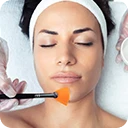
Chemical peels use an acid or another chemical agent to create controlled exfoliation. Superficial peels may help with dullness, mild discoloration, congestion, or uneven texture. Deeper peels involve greater injury and recovery.
A peel’s strength depends on more than its advertised percentage. The ingredient, formulation, application time, and your skin condition all affect the result.
Temporary stinging, dryness, and peeling may occur. Stronger treatments carry greater risks, including pigment changes and scarring. A peel should not be chosen simply because it promises dramatic shedding.
Individual skin spots need a different approach. Skin tags, milia, cherry angiomas, and pigmented spots are different lesions, not one category of cosmetic imperfection. They may require different removal methods.
Some providers use radiofrequency or electrosurgical devices to remove selected benign lesions. That does not mean every spot should be treated this way. A new, changing, bleeding, irregular, or unexplained spot needs medical assessment before cosmetic treatment. Destroying an undiagnosed lesion can interfere with proper evaluation.
How Much Do Skin Rejuvenation Treatments Cost in Vancouver?
Prices vary with appointment length, products, provider qualifications, equipment, and treatment intensity.
Broad introductory estimates sometimes place basic facials around CAD $35 to $50, more comprehensive facials around CAD $75 to $90, equipment-assisted facials around CAD $100 to $250, and superficial peels around CAD $100 to $200.
Treat these as rough examples, not dependable Vancouver-wide rates. They may not reflect current local pricing, and many appointments cost more. Microneedling, medical laser treatments, and intensive resurfacing should be priced separately rather than compared with a basic facial.
Ask for the expected total course cost. A lower session price can become expensive when several appointments and maintenance visits are recommended. Confirm whether the estimate includes consultation, aftercare products, taxes, and follow-up.
Buying a package before your skin has been assessed is rarely the best starting point.
What to Ask Before Booking
A consultation should be specific enough that you understand the decision, not simply agree to it. Useful questions include:
-
What is causing the concern, and is cosmetic treatment appropriate?
-
Why is this procedure suitable for my skin tone and medical history?
-
Who will perform it, and what training do they have with this device?
-
What improvement is realistic, and how many sessions might be needed?
-
What are the recovery requirements, risks, and arrangements if a complication occurs?
Share your medications, supplements, allergies, past reactions, and history of pigment changes or unusual scarring. Mention recent tanning and any retinoids, exfoliating acids, or acne treatments you use.
Do not stop prescribed medication on your own. The treating professional may need to coordinate with your prescriber.
Recovery, Makeup, and Treatment Frequency
There is no single aftercare schedule for every facial or rejuvenation procedure.
After a gentle facial, makeup may be acceptable relatively soon if the skin is comfortable and the provider agrees. After extractions, microneedling, a peel, or resurfacing, waiting may be necessary. The issue is irritation, contamination, and healing, rather than a universal claim that makeup always clogs freshly treated pores.
Follow procedure-specific instructions. Gentle cleansing, suitable moisturizer, and sun protection are common recommendations. Broad-spectrum SPF 30 or higher is useful even on cloudy Vancouver days.
Monthly facials suit some people, but they are not a medical requirement. Starting skin care does not automatically justify frequent professional treatments. Microneedling, peels, and lasers need intervals appropriate to their depth and intensity.
Severe or worsening pain, blistering, spreading redness, pus, or unexpected skin discoloration warrants prompt contact with the treating clinician.
Choose the Least Intensive Treatment That Fits
Firmer, smoother-looking skin does not always require the most powerful device. Sometimes hydration and consistent sun protection address much of the concern. Sometimes a targeted procedure is reasonable.
The soundest choice begins with an accurate assessment and a realistic goal. A suitable treatment should have a clear purpose, acceptable risks, and recovery you can manage. If those points remain unclear after a consultation, pause before booking.