



























Sports injuries have a way of shrinking your world fast. One week you are training, running, lifting, playing, or just enjoying movement. The next, you are doing that quiet mental math every injured person knows: How bad is this? How long will I be out? Can I speed this up without leaning on pain meds every day?
That is where Extracorporeal Shock Wave Therapy, usually shortened to ESWT, enters the conversation.
ESWT is a non-invasive treatment that uses acoustic shockwaves to stimulate healing in injured tissue. It has become a useful option in sports medicine because it can reduce pain, encourage tissue repair, and help some people return to activity sooner. It is not magic, and it is not the right choice for every injury. But for tendon problems, some muscle injuries, and certain bone stress issues, it can be a very practical part of recovery.
I think that is what makes ESWT interesting. It is not trying to mask pain and call it a day. The goal is to push the body’s healing response in a more useful direction.
What ESWT actually is
The name sounds more dramatic than the treatment usually feels.
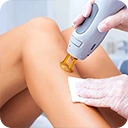
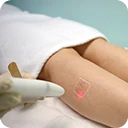
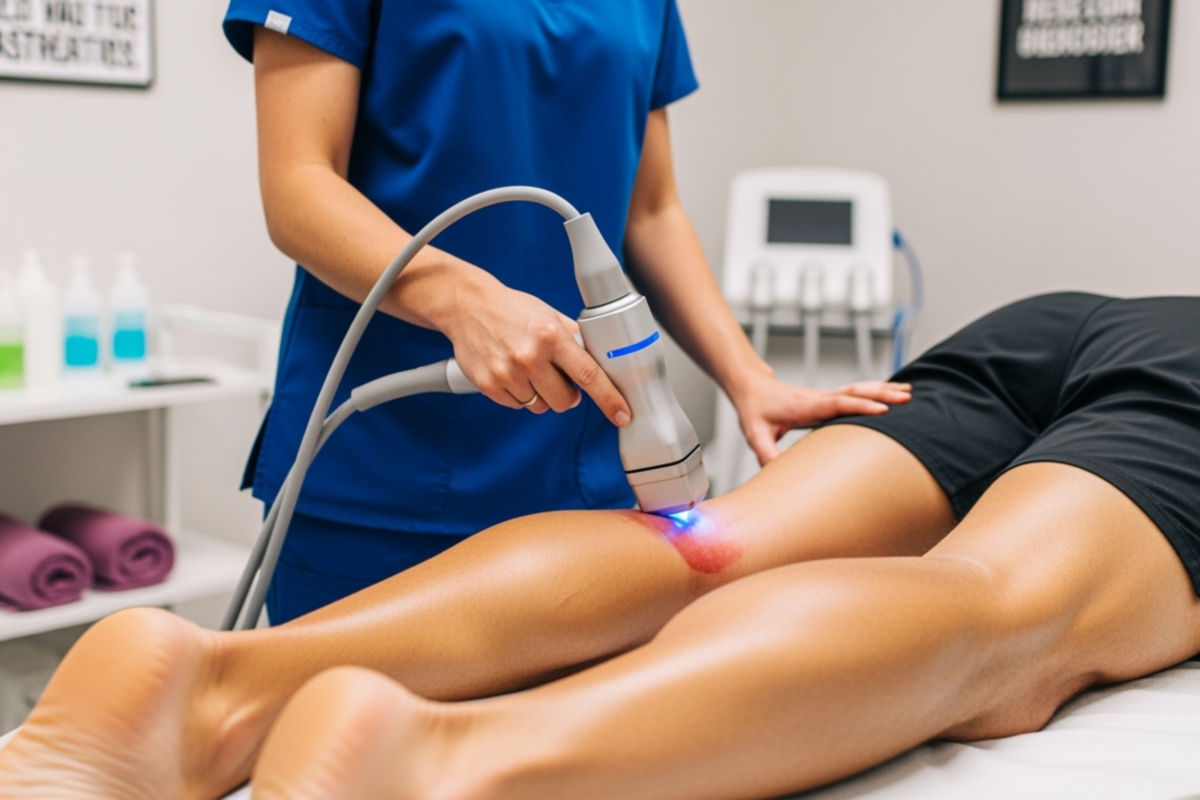
Extracorporeal Shock Wave Therapy uses high-energy acoustic waves that travel through the skin to a targeted area of injured tissue. A clinician places a handheld device over the painful or damaged region, and the machine delivers pulses into the tissue. Those pulses create mechanical stimulation that can trigger biological changes inside the body.
ESWT did not begin in sports medicine. It was first developed to break up kidney stones. Over time, clinicians noticed that shockwaves also affected bone, tendon, and other soft tissues in ways that could support healing. That opened the door to musculoskeletal care.
Today, ESWT is used for a range of overuse injuries and stubborn pain conditions, especially when symptoms have lingered longer than expected.
How shockwaves may help the body heal
This is the part people usually want explained in plain language.
When tissue is injured, healing depends on blood flow, cellular signaling, collagen repair, and the body’s ability to clear damaged material and rebuild stronger tissue. In some sports injuries, that process stalls. Tendons are a classic example. They often have limited blood supply, and chronic tendon pain can stick around long after the initial strain.
ESWT aims to interrupt that stalled pattern.
Here is what clinicians are generally trying to achieve with it:
-
Increase local circulation. Better blood flow can bring oxygen, nutrients, and healing cells to the area.
-
Stimulate tissue regeneration. The mechanical force from the shockwaves may encourage repair activity in damaged tissue.
-
Reduce pain. ESWT appears to affect pain signaling and irritated nerve endings in the treated area.
-
Promote collagen remodeling. Collagen is the structural protein that helps tendons, ligaments, and fascia handle load. Better collagen organization can mean better function.
-
Break down scar tissue or calcific deposits in some cases. This can improve movement and reduce irritation.
That mix matters because pain relief alone is not enough for athletes. A runner with a calmer Achilles tendon still needs that tendon to tolerate mileage. A tennis player with less elbow pain still needs gripping strength and load capacity. Recovery only really counts when the tissue can do its job again.
Why athletes are interested in ESWT
Athletes, and honestly active people in general, tend to care about three things: pain, downtime, and performance.
ESWT speaks to all three.
Pain relief without relying on medication
This is a big one. Many people want to avoid routine use of anti-inflammatory medication or stronger pain relief unless it is clearly necessary. ESWT gives clinicians another tool that does not depend on daily pills or injections.
That does not mean medication never has a role. Sometimes it does. But there is understandable appeal in a treatment aimed at the tissue itself rather than just the symptom.
A chance to shorten recovery time
No honest clinician should promise a fast return to sport. Bodies do not follow a fixed calendar. Still, when healing is slow or symptoms have become stubborn, ESWT may help move things along by increasing circulation and metabolic activity in the injured area.
For an athlete in the middle of a season, or anyone frustrated by a plateau in rehab, even modest progress can feel like a relief.
Better function, not just less pain
This point gets missed a lot.
If a treatment reduces pain but leaves you weak, stiff, and unable to load the tissue safely, you are not done. ESWT may support better function by encouraging collagen repair, reducing scar-related restriction, and helping the injured structure tolerate movement again.
That is why it is usually paired with rehab exercise. The shockwaves may help create the conditions for healing, but the body still needs guided loading to rebuild strength and control.
Sports injuries that may respond well to ESWT
ESWT is used across a pretty wide range of musculoskeletal problems, but it tends to come up most often in tendon injuries, muscle strains, and some bone stress conditions.
Tendon injuries
Tendons take a beating in sport. They absorb force, transfer power, and repeat the same job over and over. Once irritated, they can be annoyingly slow to settle down.
Common examples include Achilles tendinopathy and tennis elbow. Both are painful, both can become chronic, and both often involve tissue that is overloaded rather than simply inflamed.
ESWT may help by stimulating healing in degenerative tendon tissue and easing chronic pain. In practical terms, that can mean less pain when pushing off, gripping, jumping, or changing direction. It can also make it easier to tolerate the strengthening work that rehab requires.
Plantar fasciopathy often enters this conversation too, even though it is not always thought of as a sports injury. Runners and active walkers know it well. ESWT is often considered when heel pain has dragged on despite stretching, load management, and footwear changes.
For readers who want a more local overview of treatment applications, this page on shockwave therapy for sports injuries and tendon pain gives a practical snapshot of the kinds of issues clinicians commonly treat.
Muscle strains
Muscle injuries are different from tendon injuries, but they share one frustrating trait: they can seem improved before they are actually ready for full sport.
A strain often involves micro-tears in muscle fibers. The area may feel better after a few days or weeks, yet the tissue may still be disorganized, weak, or prone to re-injury if the return to training is rushed.
ESWT may support repair by stimulating circulation and healing activity around the damaged tissue. That does not replace proper rehab. The athlete still needs graded loading, mobility work, and a return-to-sport plan. But it may help the muscle recover more efficiently and reduce that familiar cycle of almost healed, then hurt again.
Hamstrings and calves are common examples here, especially in sports that involve sprinting or repeated explosive movement.
Bone stress injuries and delayed bone healing
This area needs a bit more nuance.
ESWT is sometimes used to support bone healing, including in stress-related injuries and cases where healing is delayed. The idea is that shockwaves may stimulate bone repair activity and encourage the affected area to become stronger.
That said, bone injuries vary a lot. A low-risk stress reaction is not the same as a complete fracture, and a healing plan for one person may be totally wrong for another. This is why assessment matters so much. If bone injury is suspected, imaging and clinical evaluation usually come first. ESWT is something to consider within that bigger picture, not instead of it.
What a proper treatment plan looks like
The best version of ESWT is not a stand-alone fix handed out to everyone with pain. It works best when it is part of a thoughtful rehab plan.
Step one: a real assessment
Before anyone talks about treatment, the injury needs to be identified properly.
That means asking basic but important questions. Is the pain coming from tendon, muscle, bone, or nerve? Is the tissue overloaded, torn, inflamed, or degenerative? How long has it been going on? What makes it worse? What has already been tried?
This matters because not all pain responds to shockwave therapy. If the true issue is a complete tear, a major instability problem, a nerve entrapment, or an injury that requires strict unloading, ESWT may not be the answer.
A professional assessment helps determine whether the treatment is appropriate, where it should be applied, and how it fits into recovery goals.
Step two: matching the treatment to the person
This is where things become less generic.
An endurance runner dealing with chronic Achilles pain does not need the same plan as a recreational tennis player with a fresh elbow issue. Training volume, age, injury history, sport demands, and timeline all matter.
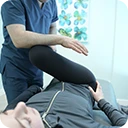
A personalized plan may combine ESWT with physiotherapy, chiropractic care, massage therapy, mobility work, strength training, and changes to training load. That combination is often what makes the biggest difference. Shockwave therapy can help open the door, but rehab exercise teaches the tissue how to tolerate life and sport again.
Step three: progressive return to activity
This part is boring, and it is also the part people skip.
Even when ESWT reduces pain quickly, return to sport still needs to be paced. The tissue has to earn back load tolerance. That usually means a gradual progression, with changes based on symptoms, strength, and function rather than impatience.
For example, a runner may move from pain-limited walking, to easy jogging, to intervals, to normal mileage. A tennis player may rebuild grip strength and hitting volume before returning to full competitive play.
The treatment helps, but the progression matters just as much.
What a session usually feels like
People hear the word shockwave and picture something intense. The reality is less dramatic.
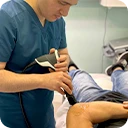
A session usually begins with locating the tender or injured area. Gel is applied to help transmit the waves, and the clinician moves the device over the target tissue. You may feel tapping, pulsing, or a rapid knocking sensation. Some areas feel mildly uncomfortable, especially if the tissue is already irritated. Most people tolerate it well, and sessions are usually short.
Afterward, the area may feel sore for a day or two. That does not always mean something is wrong. Mild post-treatment tenderness can be part of the response. Clinicians often give advice about activity modification, stretching, and strengthening between visits.
A course of treatment commonly involves multiple sessions rather than a single appointment. The exact number depends on the injury, its severity, and how the person responds.
Where ESWT fits, and where it does not
I like ESWT best when people understand both sides of it.
It can be very helpful. It is also not a cure-all.
Where it fits well
ESWT tends to make the most sense when pain has become persistent, healing feels stalled, and conservative care alone has not been enough. It is often considered for chronic tendon pain, recurring soft tissue overload, or recovery plans that need one more tool.
It can also appeal to people who want a non-surgical, non-pharmacologic option before thinking about more invasive steps.
Where caution matters
Some injuries need a different approach. Severe tears, acute fractures, infections, certain circulation issues, and some medical conditions may make ESWT unsuitable. Pregnancy, implanted devices in nearby areas, and medication factors may also affect whether treatment is recommended.
This is one of those moments where internet advice runs out of road. A hands-on clinician has to make the call.
Signs it may be worth asking about ESWT
If any of these sound familiar, ESWT may be worth discussing with a sports medicine professional:
-
You have tendon pain that has lasted for weeks or months.
-
Rest helps a little, but symptoms return as soon as training resumes.
-
You want to reduce reliance on pain medication.
-
Rehab has helped, but progress has plateaued.
-
You are dealing with recurring strain pain in a muscle or soft tissue area.
-
A clinician has identified a stress-related injury that may benefit from a broader healing plan.
That last point is important. ESWT is a treatment to ask about, not self-prescribe.
The bigger picture: recovery is rarely one thing
The most useful way to think about ESWT is as an adjunct. It supports healing. It does not replace good diagnosis, smart loading, sleep, nutrition, or time.
That may sound less exciting, but it is more honest.
Sports injuries are messy. Two people can have the same diagnosis and recover very differently. One responds quickly to exercise alone. Another needs added pain control and tissue stimulation. Another discovers the original issue was not the whole issue at all, because movement mechanics or training errors kept feeding the problem.
ESWT fits into that complexity pretty well. It gives clinicians a non-invasive tool that can help reduce pain, stimulate repair, and improve function, especially for tendon injuries, muscle strains, and some bone-related problems. For many athletes, that can mean shorter downtime and a smoother path back to training.
Final thoughts
If you are active and frustrated by an injury that will not settle, ESWT is worth understanding. It uses acoustic shockwaves to target injured tissue, with the goal of boosting healing, easing pain, and helping recovery move forward. For the right person and the right injury, that can be genuinely useful.
The key is context. The best results usually come when ESWT is matched to a clear diagnosis and folded into a broader rehab plan built around your body, your sport, and your goals.
That approach is less flashy than a miracle fix. I would still take it every time.