

































A good facial should leave you feeling comfortable in your skin, both during the appointment and afterward. That might mean less tightness, a softer feel, or a brighter-looking complexion. It can also mean having an hour when you feel listened to rather than rushed through a standard routine.
For anyone exploring facials in Kitsilano, the choice can feel surprisingly complicated. Treatment menus often emphasize skin rejuvenation, specialized products, and visible results. Yet the details that make an appointment worthwhile are sometimes quieter: a thoughtful consultation, gentle handling, and clear explanations about what your skin needs.
Relaxation and effective skin care can belong in the same appointment. The key is understanding what a facial can reasonably accomplish, how treatments should be personalized, and which signs suggest you are receiving attentive care.
Start With What You Want Your Skin to Feel Like
“Better skin” is a broad goal. Before booking, it helps to translate that wish into something more specific.
Perhaps your face feels tight after washing. Your makeup may settle into dry patches, or your skin might look dull even when you are getting enough sleep. You may also have concerns about redness, clogged pores, or products that seem to sting without an obvious reason.
These concerns do not all call for the same approach. Skin that feels rough because of dryness may need moisture and gentler care rather than more exfoliation. A complexion that looks uneven may have several contributing factors, some of which a standard facial cannot address.
Describe what you notice in everyday terms. You do not need to arrive with a diagnosis or know which ingredient to request. “My cheeks burn when I apply moisturizer” gives a practitioner more useful information than asking for the strongest treatment available.
Choose one or two priorities for the appointment. This makes it easier to agree on a realistic plan without trying to address every concern at once.
What Results Can a Facial Reasonably Deliver?
A facial is not one standardized procedure. It may include cleansing, exfoliation, extractions, massage, masks, and moisturizing products, with considerable variation in intensity.
A gentle, hydration-focused treatment may leave skin feeling softer and looking temporarily plumper. Removing surface buildup can improve smoothness and make the complexion appear brighter. Some people notice these changes immediately, while others see a subtler difference.
That fresh glow deserves some perspective, though. Hydrated skin reflects light differently, so an immediate improvement in appearance does not necessarily mean a lasting structural change has occurred.
Immediate changes versus longer-term goals
Dryness-related tightness may improve after one appointment. Persistent acne, pigmentation, visible blood vessels, or deeper wrinkles generally require a broader plan, and sometimes medical assessment.
Skin rejuvenation is a broad term, not a guarantee of a particular result. Ask what the proposed treatment is intended to change, how long that change may last, and what evidence supports the recommendation.
A professional answer should leave room for uncertainty. Skin responds differently depending on its condition, the products used, and what happens between appointments. Promises of flawless skin after one session are a reason to slow down and ask more questions.
The Consultation Is Part of the Treatment
The most useful personalization happens before products touch your face.
A practitioner should ask about your concerns and current routine, including prescription treatments, exfoliating acids, retinoids, and any recent procedures. Allergies, previous reactions, and relevant health conditions can also affect which steps are appropriate.
Mention upcoming plans, too. If you have an important event in a few days, that may influence whether to try an unfamiliar product or skip a step that could cause redness.
A brief consultation can still be thorough. What matters is whether the practitioner uses your answers to adjust the plan rather than simply collecting information.
Useful questions include:
-
What are we trying to improve during this appointment?
-
Which steps might cause irritation, and can we modify or skip them?
-
What should my skin feel like afterward?
-
What should I avoid before and after treatment?
-
Which concerns would be better assessed by a medical professional?
You should also know what the appointment includes and what it costs before treatment begins. Feeling relaxed is easier when there are no surprises.
Why a Calm Setting Matters
A soothing room does not prove that a treatment is effective. Still, comfort has real value.
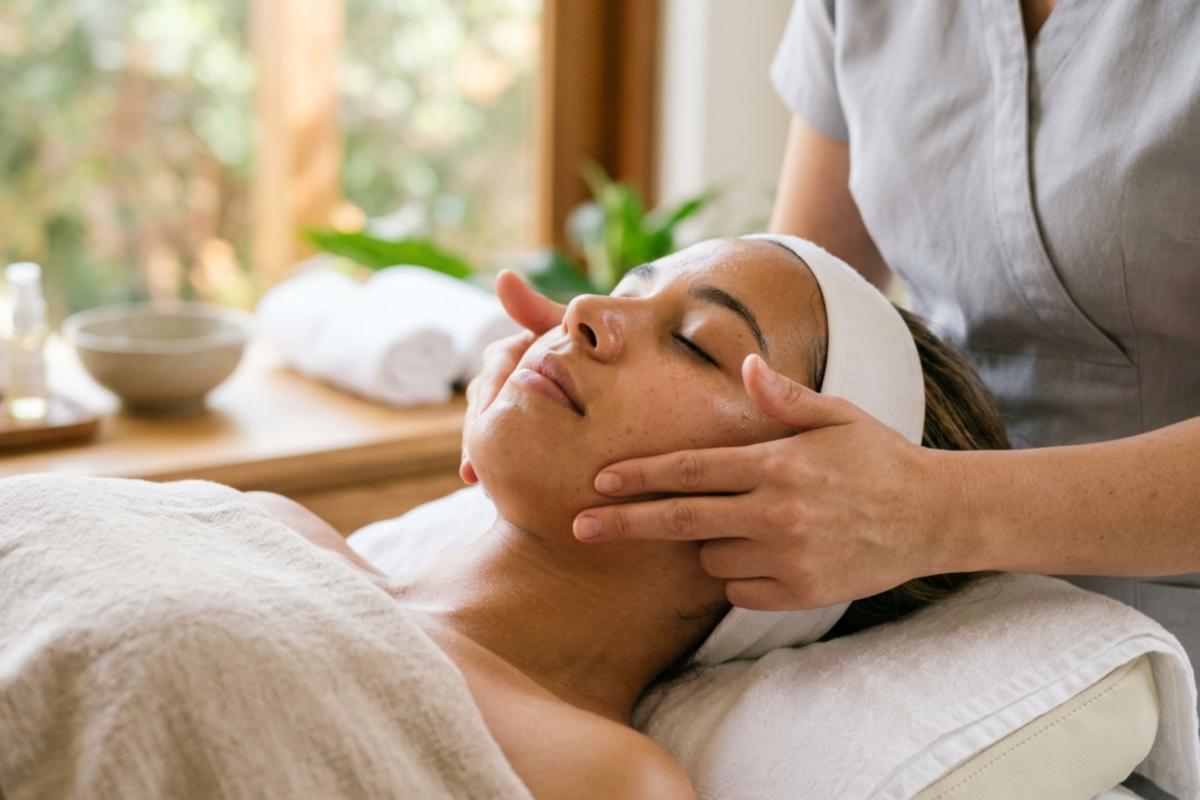
Soft music, a comfortable treatment bed, and an unhurried welcome can help you settle in. For a first facial, these details may make an unfamiliar experience feel less intimidating. The practitioner’s manner matters just as much as the room itself.
Some people enjoy hearing an explanation before every step. Others prefer a quiet appointment once the plan is agreed upon. Neither preference is wrong.
You can ask for adjustments to music, temperature, lighting, or positioning. If fragrance bothers you, mention that before treatment starts. A pleasant scent for one person can be uncomfortable for someone with migraines or fragrance sensitivity.
Facial massage may feel relaxing, but pressure should suit your comfort and skin condition. There is no need to endure vigorous handling to get value from an appointment. A session can be gentle and still be purposeful.
Sensitive Skin Needs More Than a “Gentle” Label
Sensitivity is a useful description, but it is not a diagnosis. Stinging, redness, itching, and burning can have different causes, including irritation, allergic contact dermatitis, and conditions such as rosacea.
If your skin is actively inflamed, cracked, painful, or reacting to several products, postponing a facial may be the better choice. Persistent or unexplained symptoms deserve assessment by a qualified healthcare professional.
For skin that is easily irritated, a simpler treatment can be preferable to a lengthy sequence of products. Fewer steps make it easier to limit exposure to potential triggers.
Exfoliation should match the skin in front of you
Exfoliation removes some surface skin cells, but more is not automatically better. Combining scrubs, acids, heat, and strong massage can be too much for some people, especially when they already use active products at home.
Steam is optional, too. Pores do not open and close like doors, and heat can aggravate redness in some skin types.
If extractions are proposed, ask why they are appropriate. They should not be forced, and you can decline them. Significant pain, sharp burning, or escalating discomfort is a reason to speak up immediately, not something to tolerate in pursuit of results.
What Personalization Looks Like in Practice
A customized facial does not have to involve a complicated menu or numerous add-ons. Often, it means changing the amount of exfoliation, avoiding a known irritant, or spending more time on hydration.
Consider two people who both describe their skin as dull.
One has dry, tight cheeks after using a strong cleanser twice daily. The other has oily skin with surface congestion and no noticeable sensitivity. They may use the same word to describe their concern, but their treatment plans should not automatically be identical.
The first person may benefit most from a mild approach and advice about reducing irritation at home. The second may be suited to carefully selected exfoliation, depending on their skin history and current products.
Personalization also includes knowing when to stop. If your skin becomes uncomfortable during a treatment, adjusting the plan is more sensible than completing every scheduled step.
The best recommendation may even be to do less. That can feel underwhelming when a menu promises dramatic changes, but restraint is often a sign of sound judgment.
Aftercare Should Be Clear and Manageable
A facial does not end when you leave the treatment room. The products and habits that follow can influence how comfortable your skin feels and how long visible improvements last.
Aftercare should reflect what was actually done. A basic hydrating facial and an intensive exfoliating treatment may require different precautions.
Before leaving, make sure you understand:
-
Which usual products you can continue and which to pause.
-
When to restart retinoids, exfoliating acids, or other potentially irritating products.
-
Whether you need temporary limits on makeup, exercise, heat exposure, or swimming.
-
Which reactions are expected and whom to contact if symptoms develop.
Avoid introducing several new products immediately afterward. If irritation occurs, a crowded routine makes it harder to identify the cause.
Gentle cleansing and an appropriate moisturizer are often sensible foundations. Daily broad-spectrum sunscreen with SPF 30 or higher helps protect exposed skin, including on cloudy Vancouver days.
Follow the specific aftercare instructions for your treatment. Seek prompt medical advice for severe pain, blistering, spreading redness, or other concerning symptoms. These should not be dismissed as evidence that a facial is “working.”
How Often Should You Book a Facial?
There is no universal schedule that suits everyone.
Some people enjoy occasional facials before a special occasion or when their skin feels dry. Others prefer regular appointments because they value the experience and ongoing guidance. Either approach can be reasonable.
Frequency should depend on the treatment’s intensity, your skin’s response, your goals, and your budget. A monthly appointment is not a requirement for healthy skin, and repeated exfoliation can become counterproductive if your skin does not have enough time to recover.
Before committing to a series, assess the first treatment. Did your skin feel comfortable afterward? Did the practitioner explain the plan clearly? Were the benefits meaningful to you?
If you are preparing for an event, leave enough time to see how your skin responds. Trying an unfamiliar intensive treatment immediately beforehand adds avoidable uncertainty.
Choosing a Facial Provider in Kitsilano
Convenience matters, but it should not be the only deciding factor. A nearby beauty clinic may fit your schedule perfectly while still being the wrong match for your concerns.
Look for a provider who explains the scope of their services and has training appropriate to the treatments they perform. Ask about hygiene practices, screening, and how they handle unexpected reactions. Practitioners should be comfortable referring concerns outside their scope.
Reviews can help you understand the client experience, particularly comments about listening, gentleness, and clear communication. Treat dramatic before-and-after claims more cautiously. Lighting, makeup, camera settings, and timing can all affect how skin looks in photographs.
You should feel free to ask questions or decline a recommendation without pressure. An appointment is easier to trust when you remain an active participant in the decisions.
A Facial Should Leave You Better Informed
The visible glow may be what first draws you to a facial. The more lasting value can be understanding your skin a little better.
A worthwhile appointment pairs realistic treatment goals with comfortable care. You know why particular steps were chosen, what changes to expect, and how to look after your skin at home. You also feel able to say when something does not feel right.
When comparing Kitsilano facials, give those qualities as much weight as the treatment menu. Softer skin is welcome. Leaving with clear advice, realistic expectations, and no pressure to do more than you need is worth looking for, too.