

















Acne gets talked about like it is one single problem with one single fix. It is not. A few clogged pores on the forehead behave differently than red, angry pimples on the cheeks, and neither of those acts like deep, painful cysts along the jawline.
That matters, because the treatment that helps one kind of acne can irritate another. People often learn this the hard way. They scrub harder, dry their skin out, try three spot treatments at once, then wonder why everything looks worse.
A better approach is simpler. Figure out what type of acne you are dealing with, understand what is driving it, and match your routine to that pattern. Most people do best with a mix of topical care, steady daily habits, and a few lifestyle changes that lower irritation and inflammation.
Why acne happens in the first place
Acne usually starts with three things happening at once.
First, the skin makes excess oil, called sebum. Second, dead skin cells do not shed cleanly, so they stick inside the pore and create a plug. Third, bacteria that normally live on the skin, now called Cutibacterium acnes and formerly called Propionibacterium acnes, multiply inside that blocked pore. The immune system reacts, and that is when redness, swelling, tenderness, and pus can show up.
Hormones often push this process along. So can stress, genetics, friction, sweat, heavy products, and anything that keeps pores blocked or skin inflamed.
That is why acne can feel unpredictable. You might be doing many things right and still break out because several triggers are meeting in the same place at the same time.
The three main types of acne
Most acne falls into one of three broad categories: comedonal, inflammatory, or cystic. Some people have a mix, which is common.
Comedonal acne
Comedonal acne is the clogged-pore version. This is where whiteheads and blackheads show up.
Whiteheads form when the clogged follicle stays closed at the surface. Blackheads form when the plug is open to the air and the material inside oxidizes, which darkens it. It is not dirt. That myth refuses to die.
This type of acne often makes the skin feel bumpy or rough, especially across the forehead, nose, and chin. It may not look dramatic, but it can be stubborn.
Treatment usually focuses on keeping pores clear and helping skin shed more normally. Ingredients that often help include salicylic acid and retinoids such as adapalene. A gentle cleanser and a light moisturizer matter too. People with oily skin sometimes try to skip moisturizer, but stripped skin often becomes more irritated, and irritated skin rarely behaves well.
Inflammatory acne
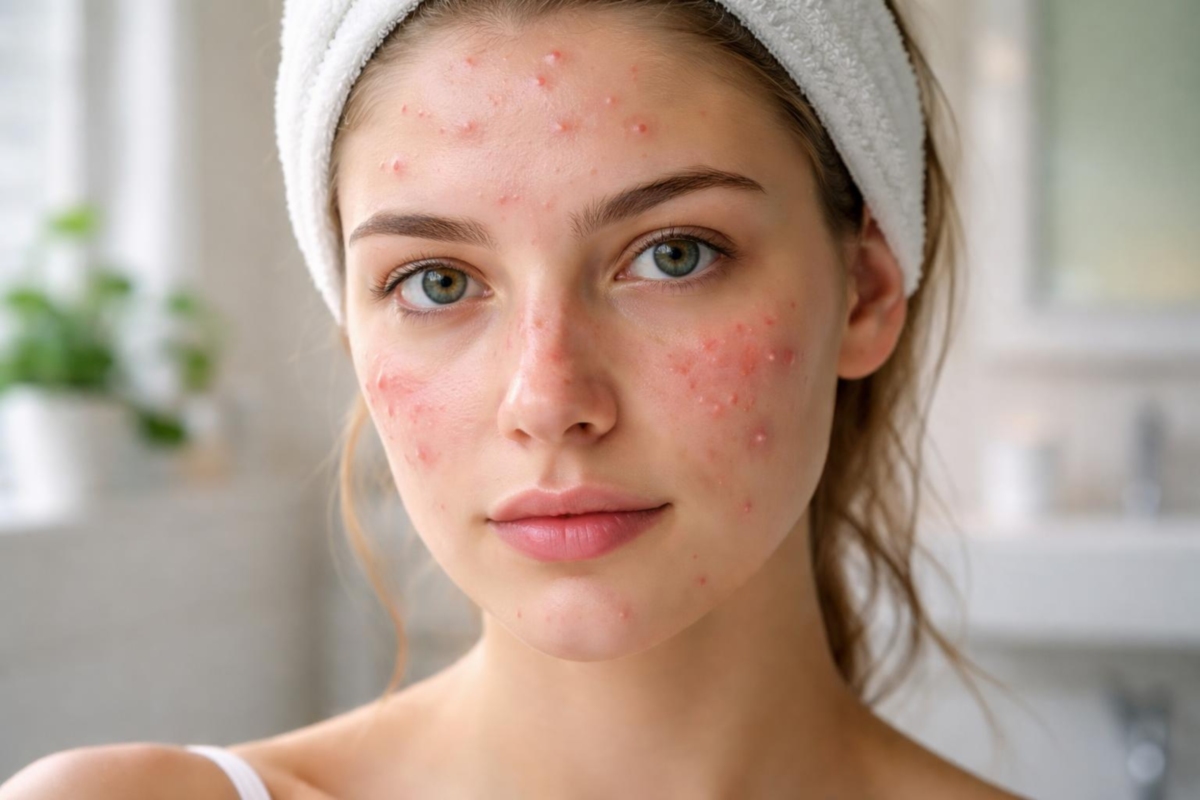
Inflammatory acne is what many people picture when they think of a breakout. These lesions are red, swollen, and tender. Papules are small inflamed bumps without visible pus. Pustules are similar, but they have a white or yellow center.
Here, blocked pores are still part of the story, but bacterial growth and the skin’s immune response play a bigger role. This acne often feels more reactive. It may flare around stress, hormonal shifts, heat, sweat, or picking.
Inflammatory acne usually responds better when treatment targets both clogged pores and inflammation. Benzoyl peroxide is a classic option because it helps reduce acne-causing bacteria. Retinoids can still help by preventing new clogged pores. Azelaic acid can also be useful, especially if you are dealing with redness or post-acne marks.
This is the point where overdoing it becomes a real problem. If you stack too many active products at once, you can end up with dryness, peeling, and more irritation, which makes inflamed acne look even angrier.
Cystic acne
Cystic acne is deeper, more painful, and more likely to scar. It often shows up as tender nodules or cysts under the skin. These are not the little pimples you can dab with a spot treatment and forget about. They can linger for weeks and leave marks behind.
This type often has a strong hormonal component, especially when it appears around the jawline, chin, or lower cheeks. It may flare around menstrual cycles or periods of high stress. For some people, it starts in adolescence and never quite leaves. For others, it appears in adulthood and feels especially unfair.
Cystic acne usually needs professional care. Topical products alone are often not enough. A dermatologist may consider prescription retinoids, oral medications, hormonal treatments, or other targeted options depending on severity, scarring risk, and medical history.
If your breakouts are deep, painful, and leaving scars, waiting it out is rarely a good plan.
Treatment works better when it matches the acne type
This sounds obvious, but it gets missed all the time.
If your main issue is blackheads and whiteheads, your skin needs help with congestion and cell turnover. If your acne is red and inflamed, you need to calm inflammation and control bacteria. If it is cystic, the goal shifts toward preventing deep inflammation and long-term scarring, often with prescription support.
Trying to treat cystic acne with harsh scrubs is like trying to fix a plumbing issue by repainting the wall. It is the wrong level of attack.
A basic pattern looks like this:
Comedonal acne responds best to pore-clearing ingredients and consistent routines.
Inflammatory acne often improves with anti-bacterial and anti-inflammatory topicals, used carefully.
Cystic acne usually needs a medical plan, not just a skin care plan.
That is the practical difference.
Lifestyle changes that can calm acne down
Skin care matters, but daily habits can either help or quietly sabotage your progress.
Go easy on heat and heavy sweating during flares
If your acne is flaring, intense heat and sweat can make irritated skin feel worse. This does not mean exercise is bad. It means certain environments can be rough on breakout-prone skin for a while.
Hot yoga is a good example. If your face is already inflamed, adding heat, sweat, and friction may not help. A cooler workout or a temporary break from heated classes can be the better call until the flare settles.
Food can influence breakouts, even if it is not the only cause
Diet is tricky because it is personal. Some people notice clear patterns, others do not. Still, a few themes come up often enough to take seriously.
A diet built around whole foods, fruits, vegetables, fiber, and steady protein tends to support more stable blood sugar and lower overall inflammation. On the other hand, simple sugars and highly refined carbohydrates can make acne worse for some people. Candy, soda, ice cream, alcohol, and heavily processed snack foods are common triggers.
Dairy is another possible issue. It does not bother everyone, but some people notice more breakouts when they consume a lot of milk or certain dairy products. The same goes for iodide-containing supplements, which can aggravate acne in some cases.
Botanical supplements sometimes get discussed for hormone support, including reishi mushroom, red clover, peppermint, saw palmetto, black cohosh, and green tea. That area is not one-size-fits-all. Herbs can interact with medications and are not appropriate for everyone, so it makes sense to talk with a qualified nutritionist or clinician before adding them.
Probiotics may help, especially after antibiotics
If you have used antibiotics for acne, restoring a healthier balance in the gut and on the skin can matter. Probiotics may help some people, particularly after a course of oral antibiotics. They are not a miracle fix, but they can be a reasonable part of a broader plan.
Hydration still matters
Drink enough water. It is boring advice, but it is still good advice.
Topical hydration matters too. Acne-prone skin still needs moisture. A light hydrating serum or lotion can support the skin barrier and make treatment products easier to tolerate. Dry, irritated skin is often more reactive, not less oily in any useful way.
The daily habits that make a bigger difference than people expect
There is no glamour here. Just habits. But habits are where a lot of progress happens.
Cleanse well at night
Night cleansing is non-negotiable if you wear sunscreen, makeup, or spend the day touching your face more than you realize. A single gentle cleanse may be enough for some people. Others do better with a first cleanse to remove sunscreen or makeup, followed by a second cleanser for the skin itself.
Toning can be helpful if the formula is gentle and not packed with alcohol. The goal is to reset and prep the skin, not strip it raw.
Stop picking
This is the advice people hate because they already know it, and yes, it is still true.
Picking and squeezing drive inflammation deeper, increase the chance of infection, and raise the risk of marks and scars. Even when you think you are being careful, you are usually doing more damage than you can see in the moment.
If you tend to pick automatically, it can help to keep spot patches on active pimples or move magnifying mirrors out of easy reach for a while.
Keep tools clean
Acne can flare when bacteria, oil, and old product build up on things that touch your face.
Sterilize razors after each use. Clean makeup brushes weekly. If you use beauty sponges, wash them often and replace them before they become sad little bacteria hotels.
Clean the surfaces your face touches
This one gets overlooked constantly.
Change pillowcases at least twice a week. Wipe down your phone, glasses, steering wheel, and anything you press against your face regularly. If you travel, clean trays and surfaces that end up near your skin. A quick pass with an antiseptic wipe is not dramatic, but it is practical.
What to do when a breakout is painful right now
Sometimes you do not need theory. You need the pimple to hurt less.
For painful breakouts, apply ice for 15 minutes, two to three times a day. Wrap the ice in a clean cloth rather than pressing it directly onto bare skin. This can reduce pain, swelling, and some of the visible inflammation.
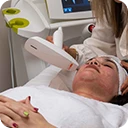
LED blue light therapy may also help reduce acne severity and lower the risk of lingering inflammation and scarring, especially for inflammatory breakouts. It is not magic, and it does not replace a full treatment plan, but it can be a useful add-on for the right person.
If a spot treatment burns, stings sharply, or leaves the skin raw, back off. A product that feels aggressive is not automatically a product that is working.
A simple routine usually beats an elaborate one
People often assume acne needs a complicated ten-step system. I rarely think that helps.
A simple routine is easier to stick with, easier to troubleshoot, and less likely to irritate your skin.
In the morning, many people do well with a gentle cleanse, a treatment product if tolerated, a light moisturizer, and sunscreen. At night, cleanse thoroughly, apply the main acne treatment, then use a hydrating product if needed.
That is enough structure for most people to start. Once your skin settles, you can decide whether anything else actually adds value.
When to get professional help
There is a point where persistence stops being admirable and starts wasting your time.
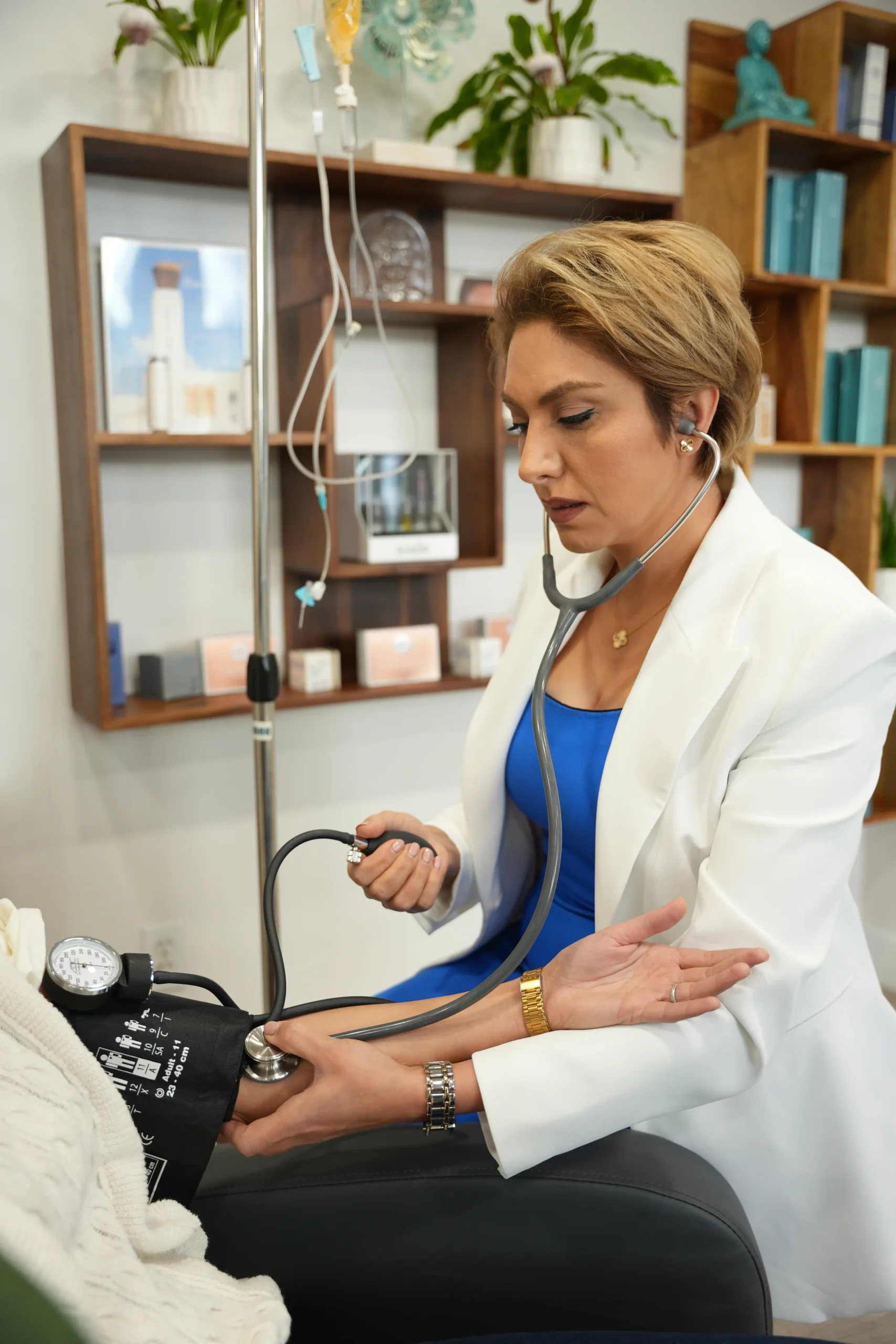
See a dermatologist if your acne is painful, deep, widespread, leaving scars, or not improving after a consistent trial of over-the-counter treatment. Adult acne around the jawline, sudden severe breakouts, or acne tied to menstrual changes can also point to a hormonal pattern that deserves a closer look.
A nutritionist can be helpful too, especially if you suspect food triggers, want guidance on supplements, or are trying to rebuild after antibiotic treatment.
Professional care is not a last resort for vanity. It is often the fastest way to stop a cycle that is affecting your skin, your confidence, and frankly, your patience.
The goal is steady improvement, not perfect skin overnight
Acne treatment is often slower than people expect. That part is frustrating. Most good routines need several weeks before you can judge them fairly. Jumping from product to product every few days usually creates more confusion than progress.
The better mindset is to look for trends. Are you getting fewer deep breakouts? Are pimples healing faster? Is the redness less intense? Are you picking less because your skin feels calmer?
Those changes count.
If you remember one thing, make it this: acne is easier to manage when you identify the type, treat the cause behind that type, and support your skin with boring but effective habits. Cleanse well. Keep tools clean. Do not pick. Stay hydrated. Be smart about food and supplements. And when breakouts are deep or stubborn, get help early.
That is not flashy advice. It is just the kind that tends to work.