

























A breakout can heal and still leave something behind. Sometimes it is a pink spot that lingers for weeks. Sometimes it is a brown mark, a shallow indentation, or a deeper change in the skin’s surface. These concerns often get grouped together as “acne scars,” but they do not all need the same treatment.
That distinction matters. A product that helps fade discoloration will not release a scar tethered beneath the skin. A resurfacing procedure that improves texture may not be the best first step for persistent redness.
Effective acne scar care starts with identifying what remains after the breakout, then building a plan around it. For many people, that means managing active acne, treating color changes, and addressing structural scars in stages. Improvement is possible, but it usually requires patience and realistic expectations.
Is It an Acne Mark or a Structural Scar?
Acne can leave several types of changes, and it is common to have more than one at the same time.
Pink or red marks
Post-inflammatory erythema, often shortened to PIE, describes pink, red, or sometimes purplish marks left after inflammation. These marks are associated with changes in small blood vessels rather than a loss of skin tissue.
They can gradually fade, although the timeline varies. Carefully selected vascular lasers or light-based treatments may help persistent redness. A clinician should first confirm that the redness is a leftover mark rather than ongoing acne or another skin condition.
Brown or gray-brown marks
Post-inflammatory hyperpigmentation, or PIH, develops when inflammation triggers excess pigment production. It can affect any skin tone, but it is often more noticeable and persistent in deeper skin tones.
Sun exposure can darken these marks and prolong their appearance. Daily sun protection and appropriate pigment-focused skin care are usually part of treatment. Procedures may also help, but overly aggressive treatment can create more inflammation and worsen pigmentation.
Indented or raised scars
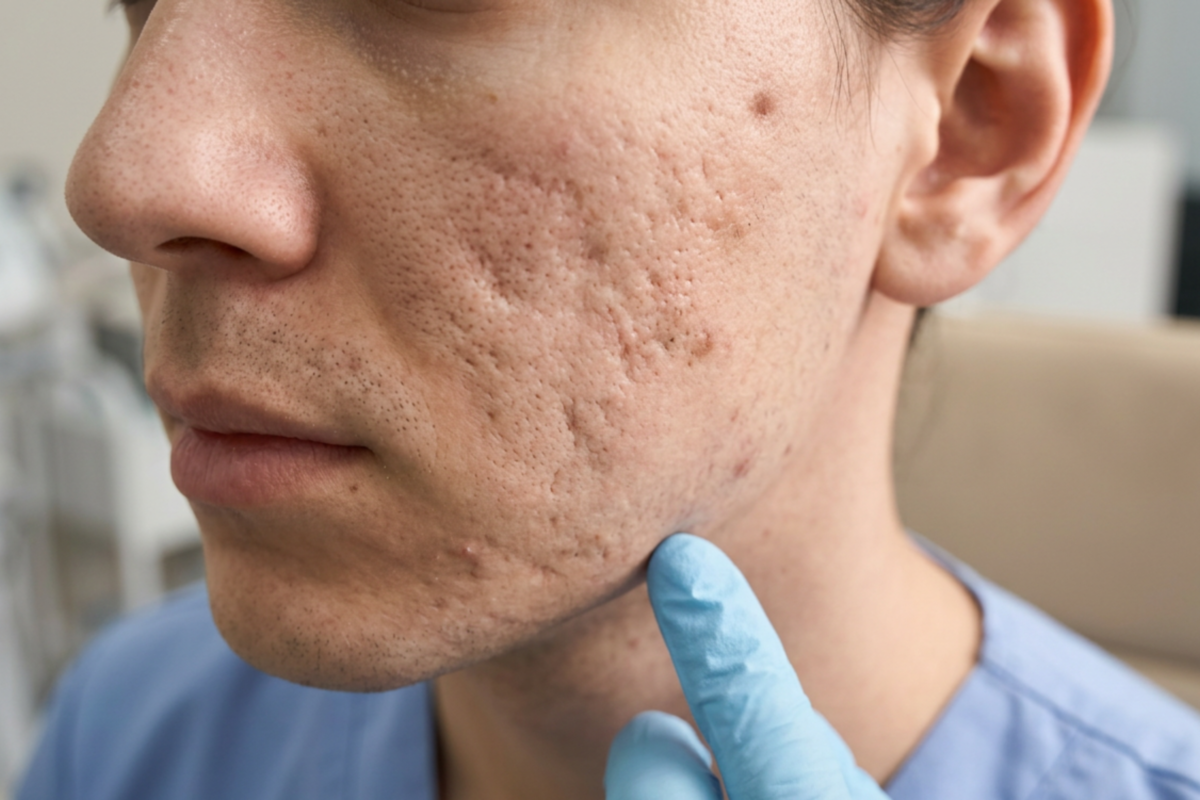
Structural scars change the skin’s contour. Indented, or atrophic, scars involve tissue loss and sometimes attachment to deeper tissue.
Boxcar scars have relatively defined edges. Rolling scars create broader depressions and an uneven, wave-like surface, often because fibrous bands pull the skin downward. Ice-pick scars are narrow and deep.
Raised scars involve excess scar tissue. Hypertrophic scars stay within the boundaries of the original injury, while keloids extend beyond them.
Skin care may improve the surrounding skin and discoloration, but it generally cannot correct established structural scars by itself.
Why Acne Control Comes First
Scar treatment is harder to sustain when new inflammatory breakouts keep creating new damage. That is why acne management is the foundation of a scar-repair plan.
Scarring risk tends to increase with deep or inflammatory acne, recurring breakouts, and delayed treatment. Individual healing patterns matter too. Someone with relatively limited acne can develop scars, while another person with frequent breakouts may develop fewer.
Avoiding picking or squeezing is useful, but scarring is not simply a consequence of touching the skin. People should not be blamed for scars that develop despite careful skin care.
Some treatment for marks or selected scars can happen while acne is being managed. More intensive resurfacing is often planned once active inflammatory breakouts are reasonably controlled. The timing depends on the procedure and the condition of the skin.
If acne is painful, persistent, or already leaving indentations, seeking medical care early can help prevent further scarring. Waiting for it to “run its course” is not always the best option.
What Active Acne Treatment May Include
Acne treatment should match the severity of the condition, the person’s medical history, and how well their skin tolerates medication.
Topical options include retinoids, benzoyl peroxide, azelaic acid, salicylic acid, clascoterone, and prescription antibiotics. These work in different ways. Some help prevent clogged pores, while others reduce inflammation or affect acne-related bacteria.
More products do not automatically mean better results. Combining several irritating ingredients can damage the skin barrier and make treatment harder to continue. A gradual introduction and a gentle moisturizer often help with tolerability.
Topical antibiotics are generally used with benzoyl peroxide to limit antibiotic resistance, rather than used alone indefinitely.
For widespread, inflammatory, or treatment-resistant acne, a clinician may consider oral antibiotics, hormonal treatment for suitable patients, or isotretinoin. An injection into an individual painful nodule may sometimes help it settle more quickly.
Isotretinoin requires medical supervision and can cause severe birth defects. Patients who could become pregnant must follow applicable pregnancy-prevention and testing requirements. Treatment length varies, and some people experience recurrence afterward.
Pregnancy, plans for pregnancy, and breastfeeding also affect the suitability of other acne medications. These details should be discussed before starting treatment.
What a Useful Scar Consultation Looks Like
A consultation should do more than identify a treatment device. The clinician needs to understand which changes are present and what you want to improve.
They will usually assess scar depth, shape, distribution, and whether there are bands tethering the skin. Skin tone, active acne, previous procedures, medication use, and a history of unusual scarring also influence the plan.
Your priorities matter. You may be most bothered by redness, even if the clinician notices several indentations. Or you may be comfortable with some discoloration but want makeup to sit more evenly over your cheeks.
Practical questions belong in the discussion too:
-
Which changes is each proposed treatment expected to improve?
-
What are the risks for my skin tone and medical history?
-
How much visible recovery time should I plan for?
-
How many sessions might be needed, and what will the full course cost?
A good plan explains its limitations. Scar improvement is a reasonable goal; completely restoring the skin to its pre-acne appearance often is not.
Photographs taken under consistent lighting can help track progress. Otherwise, changes in shadows and camera angles can make results difficult to judge.
Why Textural Scars Often Need Several Approaches
Different scars have different underlying problems. Treating all of them with the same procedure may leave part of the problem untouched.
Consider someone with rolling scars, a few deep narrow scars, and brown marks. Releasing tethered tissue may help the rolling scars. The narrow scars may need a targeted technique. The brown marks require a separate pigment-management strategy.
This is the logic behind layered treatment: address the structure that is causing the depression, then treat remaining surface irregularity and color changes where appropriate.
Releasing tethered scars
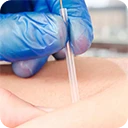
Subcision uses a needle or specialized instrument beneath the skin to release fibrous bands that pull certain scars downward. It is most relevant to selected tethered scars, particularly rolling scars.
Bruising, swelling, bleeding, and tenderness can occur. There are also less common risks, including infection and injury to nearby structures, so clinician experience and careful anatomical assessment matter.
Subcision does not automatically address every depression. Some scars are primarily deep tissue defects rather than tethered areas.
Supporting volume where appropriate
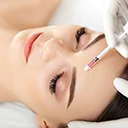
Selected fillers or biostimulatory treatments may help certain depressed scars. Biostimulators encourage collagen production over time, while some fillers provide more immediate support.
These approaches are not suitable for every scar. Product choice, placement, and the person’s scarring history require careful consideration. Injectable treatments also have risks, including nodules, infection, and rare but serious vascular complications.
Improving the surface
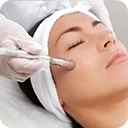
Fractional lasers, radiofrequency microneedling, and conventional microneedling can stimulate remodeling and improve selected textural changes.
Conventional microneedling creates controlled punctures in the skin. Radiofrequency microneedling delivers energy through needles at selected depths. Resurfacing lasers vary substantially: nonablative treatments heat tissue without removing the skin’s surface, while ablative treatments remove tissue in a controlled way.
Their effects, risks, and recovery periods are different. More intense treatment is not automatically the better choice.
Deep ice-pick scars and some sharply edged boxcar scars may require focal chemical or minor surgical techniques rather than broad resurfacing alone.
Where PRP Fits, and Why Raised Scars Need Separate Care
Platelet-rich plasma, or PRP, is prepared from a person’s own blood and may be used alongside procedures such as subcision or microneedling.
Clinical studies suggest that PRP can improve outcomes for some atrophic acne scars when added to other treatments. However, study methods and preparation protocols vary. It should be understood as a possible adjunct, not a guaranteed result or a replacement for selecting the right procedure.
Raised scars need a different strategy. Treatments may include injections, silicone-based care, or selected laser procedures, depending on the scar. Keloids deserve particular caution because further skin injury can sometimes trigger additional scar growth.
This is another reason to avoid choosing a procedure solely because it is advertised for “skin rejuvenation.” That broad label does not explain whether it is appropriate for a particular acne scar.
Skin Tone, Safety, and Isotretinoin Timing
Deeper skin tones can respond well to scar treatment, but procedure selection and settings require particular care. Inflammation after a procedure may lead to hyperpigmentation, and some treatments can also cause areas of reduced pigment.
Laser type, energy level, treatment density, needle depth, and aftercare all affect risk. A clinician may recommend a more conservative approach or a test area. No procedure is completely free of pigment risk.
A history of keloids, poor wound healing, certain medical conditions, or medications may also change the plan.
Isotretinoin timing deserves an individualized discussion. Older advice often called for delaying many procedures for months after treatment. A 2017 American Society for Dermatologic Surgery consensus statement found insufficient evidence to justify delaying certain procedures, including nonablative lasers, solely because of current or recent isotretinoin use.
That does not mean every procedure is suitable during isotretinoin treatment. Fully ablative resurfacing and other more invasive procedures require separate consideration. Tell the treating clinician about current and previous isotretinoin use rather than stopping medication or scheduling a procedure independently.
What Recovery and Progress Actually Look Like
Many in-clinic scar procedures use topical numbing, local anesthetic, or both. General anesthesia is typically unnecessary. Some steps can be combined in one visit, but combining treatments may also increase recovery demands.
Downtime depends on the intensity of treatment. Some redness- or pigment-focused procedures involve little interruption to daily activities. Microneedling and fractional treatments may cause several days of redness or swelling. More aggressive resurfacing can involve peeling, crusting, and visible recovery for roughly five to seven days, sometimes longer. Residual redness may last beyond that period.
Follow the clinician’s instructions about cleansing, moisturizing, makeup, exercise, and restarting active skin-care ingredients. Daily broad-spectrum sunscreen with SPF 30 or higher is usually important, alongside shade and protective clothing. Tinted sunscreen containing iron oxides may be useful for people whose pigmentation is aggravated by visible light.
Seek advice promptly for increasing pain, spreading redness, pus, fever, or other unexpected symptoms.
Results also need time. Early swelling can temporarily make indentations look smoother, so it is not a reliable measure of the final outcome. Collagen remodeling takes months. Meaningful textural improvement often requires several sessions across months, and some plans extend to a year.
A Realistic Path Toward Improvement
Acne and scarring can affect confidence, social comfort, and emotional well-being. Wanting treatment is understandable. Choosing not to pursue procedures is equally valid.
The most useful plan starts with a clear diagnosis, keeps active acne under control, and matches each treatment to a specific concern. It also respects your budget, schedule, and willingness to accept downtime.
Coverage and referral requirements vary by health system and treatment context. Medical acne care and aesthetic scar procedures may be handled differently, so ask what is included before committing.
Progress may mean fewer new breakouts, lighter marks, softer scar edges, or less pronounced depressions. Those changes can be worthwhile even when some scars remain. The goal is a thoughtful course of care with measurable improvement, not a promise of flawless skin.