






























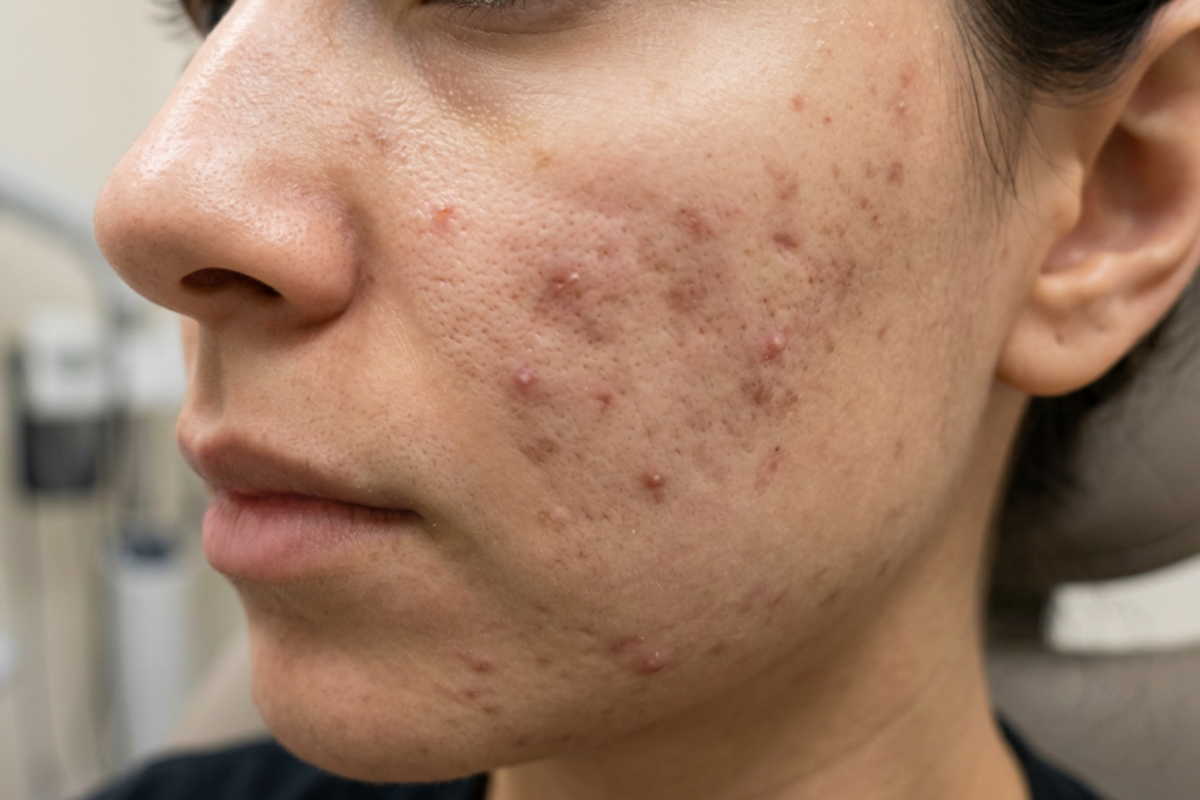
A breakout can heal long before the reminder of it disappears. Sometimes that reminder is a flat brown spot. Sometimes it is lingering redness or a small indentation that becomes more noticeable in certain lighting. These changes can look similar at first glance, but they do not necessarily respond to the same treatment.
Chemical peels and microneedling are both used for post-acne skin concerns. Neither is universally better. A useful starting point is to ask whether you want to change the color of your skin, its texture, or both.
Understanding that distinction can help you make sense of treatment recommendations, recovery times, and realistic results. It can also prevent a frustrating mismatch between the procedure you choose and the concern you actually want to address.
Acne Marks and Acne Scars Are Different
People often use “acne scars” to describe anything a breakout leaves behind. Medically, however, a flat mark and a structural scar are different.
Flat marks involve color changes
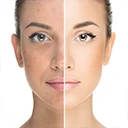
Post-inflammatory hyperpigmentation is the brown, gray-brown, or darker discoloration that can follow inflammation. It happens when the skin produces or deposits extra pigment after an injury, including an acne breakout. It can affect any skin tone, although it is often more noticeable and persistent in darker skin.
Red, pink, or purplish marks may be post-inflammatory erythema, which involves changes in small blood vessels rather than excess pigment. These marks can be especially visible in lighter skin, though their appearance varies.
Both types are generally flat. If you run a finger over the area, the skin’s contour has not changed.
This distinction matters because a treatment that helps brown pigmentation may do less for persistent redness. Treating every colored spot as a pigment problem can lead to disappointing results or unnecessary irritation.
Scars involve changes in structure
Indented acne scars develop when inflammation damages tissue and healing leaves a deficit or altered arrangement of collagen. Common patterns include rolling scars with broad, sloping edges, boxcar scars with more defined borders, and narrow, deep ice-pick scars.
Some acne scars are raised rather than indented. Hypertrophic scars and keloids need a different approach and should not be treated as ordinary surface roughness.
You can also have several concerns at once: brown marks on the cheeks, a few shallow depressions, and deeper scars elsewhere. That is why treatment planning should begin with an assessment rather than a ranking of popular procedures.
When Chemical Peels Make Sense
A chemical peel applies an acid solution to create controlled exfoliation or injury at a selected skin depth. The effect depends on the substance used, its concentration, how it is applied, and the skin’s response.
Superficial peels work mainly on the outer skin layers. They are often considered for post-acne pigmentation, uneven tone, and mild surface roughness. Some can also be useful within a broader acne management plan.
For someone whose main complaint is flat brown marks with little indentation, a carefully selected peel may be a reasonable starting point. There may be little reason to begin with a collagen-focused procedure when pigment is the main concern.
What peels can and cannot change
Peels can help improve some superficial discoloration and smooth minor surface irregularities. A series may be recommended because gradual improvement is often safer and more predictable than trying to achieve everything in one session.
However, a light peel cannot reliably rebuild the tissue beneath a deep indentation. It may make the surrounding skin look more even without substantially changing the scar itself.
Persistent red marks also deserve separate consideration. They are not simply brown pigmentation in a different shade, and peels are not automatically the best option for them. Depending on the cause, time, gentle skin care, or vascular treatments may be more appropriate.
Medium-depth peels reach deeper than superficial peels, but they also involve more recovery and greater risk. Choosing a stronger peel is not a simple shortcut to better results.
When Microneedling Makes Sense
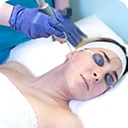
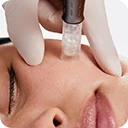
Microneedling uses fine needles to create controlled punctures in the skin. The healing response stimulates collagen remodeling, which can gradually improve certain types of indented acne scars.
It is commonly considered for rolling scars and some shallow boxcar scars. These concerns involve changes below the surface, so a treatment aimed at dermal remodeling may be more suitable than superficial exfoliation alone.
The improvement is gradual. Skin needs time to form and reorganize collagen, and a treatment series is often necessary. Results may continue to develop after the initial redness has settled.
Scar shape affects the outcome
“Pitted scars” is a broad description, not a single diagnosis. A shallow depression and a narrow, deep ice-pick scar may need very different treatments.
Microneedling alone may have limited effects on deep ice-pick scars or scars held down by fibrous bands beneath the skin. A dermatologist may discuss other options, such as subcision, focal chemical reconstruction, or selected laser procedures. These are specialized treatments, not interchangeable versions of a standard peel or microneedling session.
Conventional microneedling is also different from radiofrequency microneedling, which adds heat through an energy-based device. Their risks and recovery can differ. Ask exactly which procedure is being proposed.
Can Chemical Peels and Microneedling Be Combined?
They can be part of the same treatment plan, particularly when someone has both discoloration and indented scarring.
The reasoning is straightforward: a peel may address pigment and superficial roughness, while microneedling targets collagen remodeling. Treating both concerns may produce a more balanced improvement than focusing on only one.
Some clinical studies of atrophic acne scars have found improvements with either treatment alone and greater improvements with selected combination protocols. However, studies vary in size, treatment methods, scar types, and follow-up periods. They do not establish one combination as the best choice for everyone.
A combined plan also does not necessarily mean receiving both procedures during the same appointment. Timing, treatment intensity, and recovery intervals should be selected by a qualified clinician. Applying acids to freshly needled skin outside a carefully evaluated clinical protocol can increase irritation and injury.
For mixed concerns, a staged plan may be sensible: control active acne, address the most bothersome marks or scars, then reassess before adding another procedure.
Recovery: What Should You Expect?
Downtime is more than the number of days you stay home. Skin may look presentable while still feeling dry, sensitive, or less tolerant of usual products.
TreatmentCommon short-term effectsTypical recovery considerationsSuperficial chemical peelMild redness, tightness, dryness, or light flakingMay involve little visible downtime, though irritation can last several daysMedium-depth chemical peelMore obvious redness, peeling, and tendernessOften requires about five to seven days of initial recovery, sometimes longerConventional microneedlingRedness, sensitivity, mild swelling, or pinpoint bleedingVisible redness commonly lasts about one to five days, depending on treatment intensity
These are general estimates, not guarantees. Depth, technique, skin sensitivity, and aftercare all affect recovery. Persistent redness after a deeper peel can last beyond the initial peeling period.
Schedule treatment with some breathing room before an important event. A recovery estimate is not a promise that your skin will be camera-ready on a particular day.
Seek medical advice if you develop worsening pain, spreading redness, pus, fever, blistering, or other unexpected symptoms after treatment.
Skin Tone and Medical History Matter
Both treatments can cause unwanted pigmentation, particularly when they are too aggressive or followed by excessive irritation or sun exposure. Darker skin tones are more prone to post-inflammatory hyperpigmentation, but that does not mean procedures are automatically unsuitable.
It means treatment selection and practitioner experience matter.
A clinician should review your tendency to develop dark marks, your history of unusual scarring, and any previous reactions to procedures. They should also assess active acne, skin infections, eczema, and other conditions that could affect healing.
Mention medications, supplements, pregnancy or breastfeeding, and any history of cold sores. Current or recent isotretinoin use also deserves a specific discussion because suitability depends on the procedure and individual circumstances, rather than a blanket waiting rule for every treatment.
Microneedling is generally avoided over active inflammatory acne or infected skin. Treating ongoing acne first helps reduce the risk of further scarring and avoids working on skin that is already inflamed.
Daily Care Supports the Treatment Plan
It is tempting to focus on the appointment and treat home care as an afterthought. For post-acne pigmentation, especially, daily habits can make a meaningful difference.
Use a broad-spectrum sunscreen with SPF 30 or higher, and reapply according to the label, particularly during outdoor exposure. Shade and protective clothing help too. For some people with hyperpigmentation, a tinted sunscreen containing iron oxides may provide useful protection against visible light.
A gentle cleanser and a suitable moisturizer can support the skin barrier during recovery. Scrubs, picking, and adding several strong active ingredients at once can prolong irritation.
Follow the clinician’s instructions about when to pause and restart retinoids, exfoliating acids, benzoyl peroxide, makeup, and other products. Avoid at-home needling or strong peels as a way to accelerate progress between appointments. More injury does not necessarily mean more improvement.
Some flat marks fade gradually without a procedure. Prescription or over-the-counter treatments may also help, depending on whether the concern is pigment, active acne, or another condition.
How to Choose a Starting Treatment
A useful consultation should connect the proposed procedure to a visible, specific concern. “Skin rejuvenation” is a broad goal; “reducing brown marks” or “softening shallow rolling scars” is easier to assess.
Consider two examples. Someone with smooth skin and lingering brown spots may benefit more from pigment-focused care, possibly including a superficial peel, than from microneedling. Someone with shallow cheek indentations and little discoloration may be a better candidate for collagen-focused treatment.
Neither example is a diagnosis. They show why two people with “acne marks” can reasonably receive different recommendations.
Before agreeing to a plan, ask:
-
Are my main concerns pigmentation, redness, structural scars, or a combination?
-
Which specific changes should this treatment improve, and which will likely remain?
-
How does my skin tone or medical history affect the risks?
-
How many sessions might be needed, and when will we reassess?
-
What recovery and aftercare should I realistically plan for?
Clear answers are more useful than promises of flawless skin. Acne scars can often improve, but complete removal is uncommon. Photographs taken under consistent lighting can help track gradual changes more reliably than daily mirror checks.
Choose for the Concern You Actually Have
Chemical peels generally make more sense for flat pigmentation and mild surface irregularities. Microneedling is often better suited to selected indented scars that need collagen remodeling. Persistent redness, deep scars, and raised scars may require a different approach altogether.
If color and texture are both concerns, a staged or combined plan may help. The right choice depends on scar type, skin tone, active acne, medical history, and how much recovery you can manage.
Start by identifying what remains after the breakout: a change in color, a change in shape, or both. That simple distinction makes the rest of the conversation much more useful.