




























Short answer: sometimes, yes. But the honest answer is a little less tidy than that.
A lot of people assume tanning and laser hair removal simply do not mix. That idea came from somewhere real. Older laser systems were much less forgiving, especially on darker skin tones or skin that had recent sun exposure. If you heard years ago that you had to wait until winter, that advice made sense at the time.
Now, things are different. Modern laser technology can treat many skin types safely when the right device, settings, and provider are involved. Still, a fresh summer tan changes the risk calculation. So the better question is not “Can I?” but “Is my skin a good candidate today?”
That distinction matters.
Why a tan affects laser hair removal in the first place
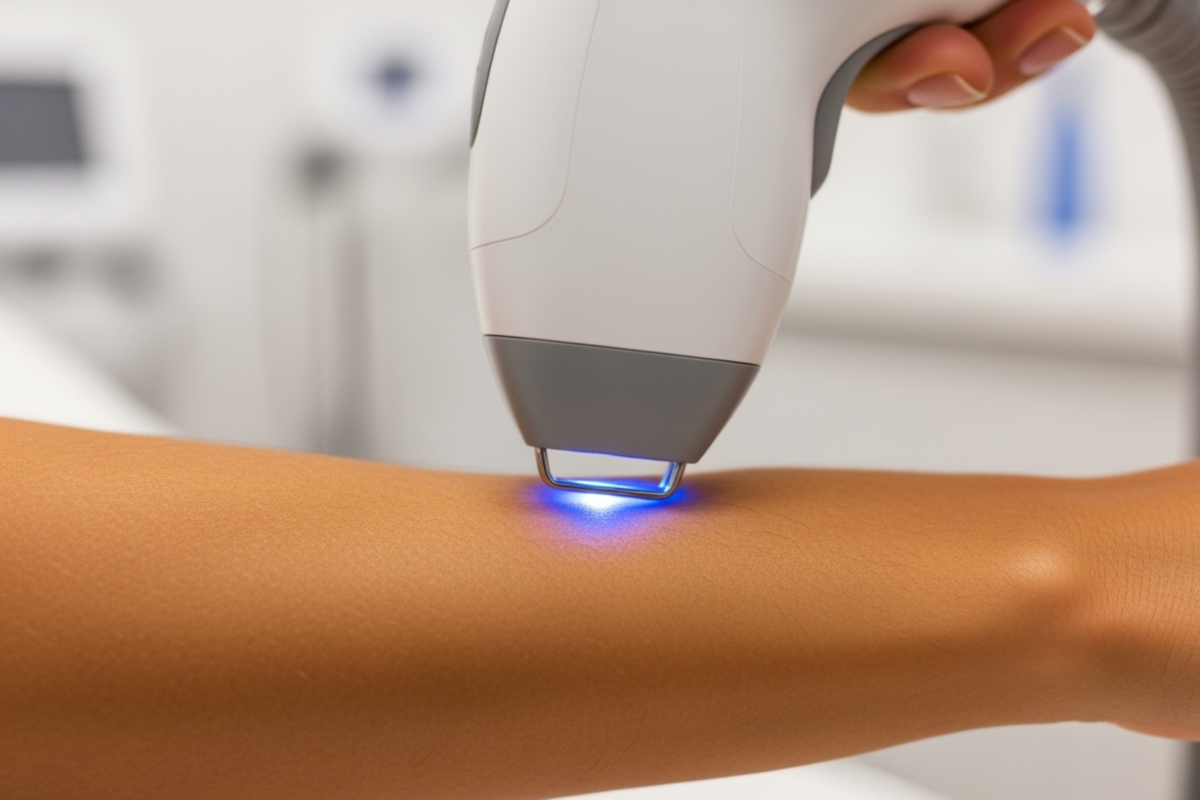
Laser hair removal works by targeting melanin, the pigment that gives hair its color. The laser sends heat into the hair follicle, which slows future growth. For the treatment to work well and stay safe, the device needs to focus more on pigment in the hair than on pigment in the surrounding skin.
That is why very light skin with dark hair has traditionally been the easiest combination to treat. There is a clear contrast. The laser can “see” the hair more easily.
A summer tan changes that contrast. When your skin has more pigment than usual, the laser may also pick up some of that pigment in the skin. That can mean more heat where you do not want it. The result could be irritation, blistering, changes in skin color, or a provider needing to lower the settings enough that the treatment becomes less effective.
So the myth is not completely made up. It is just outdated in the way it gets repeated.
The old version was: “If your skin is tan, laser hair removal is unsafe.”
The more accurate version is: “If your skin is recently tanned, your treatment may need to be adjusted or delayed.”
That is a big difference.
The myth: tanned skin means you have to stop laser hair removal until fall
I hear this one a lot, and I get why it sticks. Summer means beach days, patio weather, walks outside, accidental sun exposure, and a lot of people trying to keep up with their appointments without putting life on hold.
The good news is that modern lasers are much better at treating a wider range of skin tones than older systems were. Newer devices can use longer wavelengths, stronger cooling, and more precise settings. That gives trained providers more room to work safely with skin that is naturally medium to dark.
But here is the part people miss: natural skin tone and a fresh tan are not exactly the same problem.
A person with naturally deeper skin can often be treated very well with the right laser. A person with skin that has recently darkened from sun exposure may be a different story, even if their baseline skin tone is lighter. Fresh tanning makes the skin’s pigment less predictable. That matters because laser treatment depends on predictability.
So no, summer does not automatically cancel laser hair removal. It does mean the treatment plan may need more caution.
Natural skin tone and a summer tan are not the same thing
This is where a lot of confusion starts.
Your natural skin tone is relatively stable. A trained provider can assess it, pick an appropriate device, and choose settings based on experience and safety guidelines.
A summer tan is extra pigment layered on top of that baseline. It can fade unevenly. It can be mild or deep. It can show up after intentional tanning or just a few sunny afternoons. Skin can also be more reactive after UV exposure, even when it does not look sunburned.
Then there is self-tanner, which is a separate issue again.
Here is the practical breakdown:
-
Natural darker skin tone
This can often be treated safely with the right technology, especially when the provider has experience with a range of skin types. -
Fresh UV tan
This usually raises risk because there is more pigment in the skin than usual. Depending on how recent or deep the tan is, treatment might need lower settings, a patch test, or a delay. -
Spray tan or self-tanner
These products do not increase melanin in the way sun tanning does, but they can still interfere with treatment because they darken the skin’s surface. Most providers want self-tanner fully faded or removed before a session.
That is why two people can both say “I’m tan” and get different advice.
Modern lasers changed the conversation
This is the part that makes the old myth feel old.
Laser hair removal used to be much more limited by skin tone. Today, there are devices designed for different needs, and that matters a lot.
Alexandrite lasers are often effective on lighter skin tones because they target pigment efficiently. Diode lasers can work across a broader range of skin types. Nd:YAG lasers, with their longer wavelength, are often the go-to option for darker skin because they bypass more surface pigment and reach deeper into the follicle with less absorption in the upper skin.
That sounds technical, but the takeaway is simple: there is no single “laser hair removal” experience. The device matters. The settings matter. The person using it matters.
This is also a good place to clear up another common confusion. IPL, or intense pulsed light, is not the same thing as a laser. Some people use the terms like they mean the same treatment, but they do not. IPL uses broad-spectrum light rather than one focused wavelength. It can be helpful in some settings, but it is often less ideal for darker skin tones or recently tanned skin because it is less selective.
If you are worried about getting treated with a tan, one of the smartest questions you can ask is not just “Can you do it?” but “What device are you using for my skin type?”
That question tells you a lot.
What a good provider looks at before treating tanned skin
A safe laser hair removal appointment should never feel like someone glancing at your leg for two seconds and saying, “Looks fine.”
A proper assessment usually includes your baseline skin tone, recent sun exposure, the depth of your tan, any history of hyperpigmentation, medications that make you more sensitive to light, and whether you have used self-tanner. Sometimes a patch test is the right call, especially if the skin tone has changed since your last visit.
A provider may also ask things you did not expect, like whether you have been hiking, sitting near a sunny window on long drives, or using acne medication. That is not overkill. That is the job.
There is also a very practical reason for caution: even when a provider can technically treat tanned skin, they may need to lower the settings to stay on the safe side. Lower settings can mean weaker results. So pushing through a summer appointment at the wrong time can sometimes cost you both safety and effectiveness.
That is frustrating, but it is better than pretending all skin behaves the same in July.
When it may be okay to proceed, and when it may be smarter to wait
This is usually what people actually want to know.
You may be able to go ahead with treatment if your tan is very light, your skin has had little recent sun exposure, your provider has assessed the area carefully, and the device being used is appropriate for your skin type.
You may be asked to wait if:
-
the tan is recent or noticeably darker than your normal skin tone
-
the treatment area has been in direct sun a lot
-
the skin is sunburned, sensitive, peeling, or irritated
-
you used self-tanner recently and it has not fully faded
-
your provider cannot safely use strong enough settings without risking a reaction
That waiting period is not punishment. It is usually a way to let the extra pigment fade so the laser can target the hair more cleanly.
In many cases, people are told to avoid significant sun exposure for at least two weeks before and after treatment. Some need longer, especially after a deep tan or a sunny vacation. Exact timing varies by provider, device, and skin response, which is why one-size-fits-all advice tends to be sloppy here.
What can go wrong if you treat skin that is too tan
I do not think scare tactics are useful, but sugarcoating is worse.
If skin is too tan for the chosen settings, the laser may heat the skin more than intended. That can lead to redness beyond the usual mild reaction, swelling, blistering, scabbing, or temporary changes in pigment. Some people develop darker patches after inflammation. Others get lighter patches where pigment is lost. These changes are often temporary, but not always quick to fade.
There is also the less dramatic but still annoying outcome: poor results. If settings have to be turned down too much, you may leave thinking you checked off your appointment, while the follicles barely got the message.
That is why a cautious provider is not being difficult. They are protecting your skin and your money.
How to make summer laser hair removal safer
If you want to stay on schedule during summer, a little planning helps more than people expect.
The basics are not glamorous, but they work. Avoid intentional tanning before your appointment. Use broad-spectrum SPF 30 or higher on exposed treated areas. Reapply it if you are outside for long stretches. Wear clothing that covers the area when practical. Tell your provider if you had a beach day, a long bike ride, or even one unexpected burn.
And skip the urge to “prep” with waxing or plucking. Laser needs the follicle in place. Shaving is usually fine, and it is often recommended shortly before treatment.
If you use self-tanner, bring it up. Do not assume it does not count because it came from a bottle instead of the sun.
If you take medications or use products that can make skin more light-sensitive, mention those too. Certain antibiotics, acne medications, and even some supplements can change how your skin reacts.
These details feel small until they are not.
What treatment feels like on darker or tanned skin
People sometimes assume that if a laser is safe for darker skin, it should feel exactly the same as it does on lighter skin. Not always.
Providers may choose more conservative settings, smaller test areas, or longer intervals between sessions. The treatment can still work well, but it may need more patience. That is especially true if the provider is balancing safety with effectiveness on skin that has recently darkened.
This is one of those moments where “faster” is not automatically better. A careful plan tends to beat an aggressive one.
Temporary redness and little bumps around the follicles are common after treatment and often fade within a day or two. That is normal. What you do not want is heat that lingers, severe discomfort, or skin that looks increasingly angry as the day goes on. If that happens, you should contact your provider rather than hoping it sorts itself out on its own.
The real answer to the summer tan question
So, can you get laser hair removal with a summer tan?
Yes, sometimes. Modern lasers can safely treat many skin types, including naturally deeper skin tones, and that is a real improvement over older technology. The idea that only very fair skin can be treated is outdated.
But a fresh tan still matters. More pigment in the skin can raise the chance of irritation and can make it harder to use strong, effective settings. In some cases, treatment can go ahead with the right device and careful adjustments. In other cases, waiting is the smartest move.
If you want the shortest possible version, here it is:
Laser hair removal is not automatically off-limits in summer. It just should not be treated casually.
A thoughtful assessment, honest answers about sun exposure, and the right laser for your skin type are what make the difference. If your provider asks a lot of questions or tells you to wait a bit after getting tanned, that is usually a good sign. They are paying attention to your skin, not just the booking calendar.
And frankly, that is what you want.