


















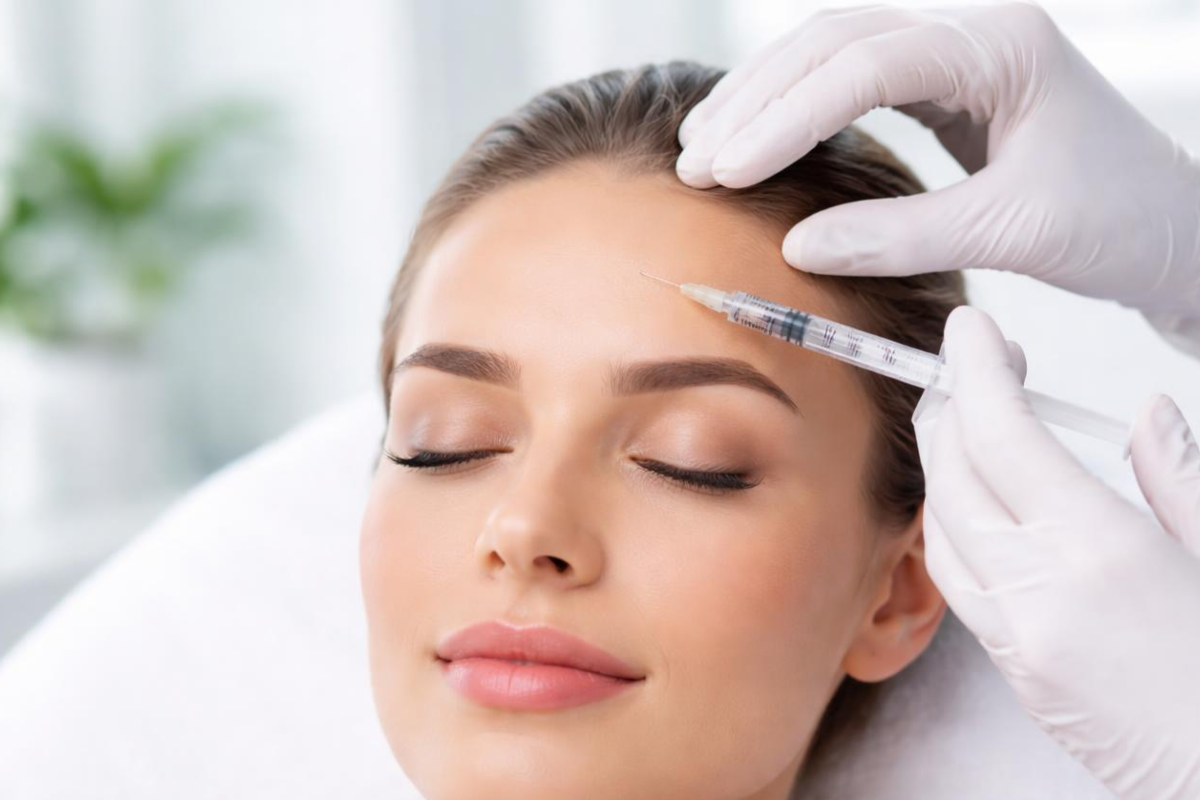
Botox is one of those treatments almost everyone has heard of, but a lot of people still feel fuzzy on the details. They know it “helps wrinkles,” maybe that it involves tiny injections, and maybe that it can go wrong if overdone. All of that is partly true, but it leaves out the part that actually matters: what Botox does, what it does not do, and why technique makes such a big difference.
At its best, Botox does not make someone look stiff or unlike themselves. It softens movement in very specific muscles so the skin doesn’t crease as deeply. The result is usually less “done” than people expect. More rested. Less tense. Sometimes just subtly smoother.
If you’re thinking about Botox, or simply want to understand why so many people choose it, here’s a clear guide to the basics.
What Botox actually is
Botox is a brand name for botulinum toxin type A, a purified neuromodulator used in small, controlled doses. Other neuromodulators include Dysport and Xeomin. They all work in a similar way, though the way they spread, kick in, and are dosed can vary a bit.
The main cosmetic use of Botox is to treat dynamic wrinkles. These are lines caused by repeated facial movement, not by volume loss. Think of the lines that appear when you frown, squint, or raise your eyebrows. Over time, those repeated movements can leave marks in the skin even when your face is at rest.
Botox helps by relaxing the targeted muscle just enough to reduce that repetitive folding. It does not fill the skin. It does not add volume. It changes muscle activity.
That distinction matters, because it explains both the benefits and the limits of treatment.
How Botox works in the body
Here’s the simple science.
Muscles move because nerves send them chemical signals. One of the main messengers involved is acetylcholine. Botox blocks the release of acetylcholine at the neuromuscular junction, which is the place where a nerve communicates with a muscle.
When that signal is reduced, the muscle cannot contract as strongly. If the muscle contracts less, the skin over it creases less. Existing dynamic lines often soften, and new lines may form more slowly because the repetitive motion is reduced.
This is also why Botox is temporary. The body gradually restores communication between the nerve and the muscle. For most people, results last around 3 to 6 months. Some notice movement returning a little earlier, some later.
I think this is one of the most useful things to understand before treatment: Botox is not permanent, and that is often part of its appeal. You are not locking yourself into a forever decision. You are trying a temporary change.
What Botox can help with
Most people associate Botox with wrinkle treatment, and that’s still its most common use. But it can do more than smooth expression lines.
Dynamic wrinkles and fine lines
This is the classic reason people book Botox. It can soften:
- forehead lines
- frown lines between the brows
- crow’s feet around the eyes
These are the areas where movement shows up fast and often. Some people notice these lines early because they have strong facial muscles. Others develop them later. Either way, the idea is the same: reduce repeated muscle contraction and the skin looks smoother.
A more rested appearance
People often say they want to look fresher, less tired, less stern, or less tense. That makes sense. Deep frown lines can make a person look upset when they feel perfectly fine. Heavy muscle pull in certain areas can create an expression that doesn’t match how someone actually feels.
A well-planned treatment can soften that mismatch without changing the person’s face in any dramatic way.
Prevention of deeper etched lines
This word, “preventive,” gets thrown around a lot. Sometimes too casually. Botox cannot stop aging, and it cannot freeze time. But it can reduce the repeated folding that contributes to wrinkle formation. For some patients, starting before lines become deeply set helps keep them from becoming more noticeable as quickly.
That said, not everyone needs early treatment. Some people have minimal muscle-driven lines and do fine waiting. This is where an individualized consultation matters more than trends.
Facial balance and symmetry
Faces are naturally asymmetrical. Everyone has one brow that lifts a little more, one side that pulls slightly stronger, one smile pattern that is a bit uneven. Botox can sometimes help with small asymmetries by adjusting muscle pull. The goal is not perfect mirror-image symmetry, because real faces do not work like that. It is balance, not perfection.
Hyperhidrosis and TMJ-related tension
Botox also has medical and wellness-related uses beyond aesthetics.
For hyperhidrosis, or excessive sweating, it can reduce sweat production in areas like the underarms by blocking signals to sweat glands.
For some people with jaw clenching or TMJ-related muscle tension, Botox may help relax overactive jaw muscles. That can lessen tightness, reduce pain, and in some cases soften a square jawline created by enlarged masseter muscles.
These uses still require careful assessment. Jaw issues especially are not one-size-fits-all.
Common treatment areas on the face
Some areas come up again and again because they respond predictably when treated well.
Glabellar lines
These are the vertical “11” lines between the eyebrows. They often show up when you frown, concentrate, or squint. Strong glabellar muscles can create a tense or angry look, even when the face is at rest.
Botox in this area can make a person look less severe without making them expressionless.
Forehead lines
These are the horizontal lines that appear when you raise your eyebrows. Treating them sounds simple, but it often is not. The forehead needs a thoughtful plan because the frontalis muscle helps lift the brows. Too much product, or the wrong placement, can flatten expression or make the brow feel heavy.
This is one reason injector experience matters so much. Forehead treatment is often where “natural” versus “frozen” really gets decided.
Crow’s feet
These are the lines at the outer corners of the eyes. They form when you smile or squint. Softening crow’s feet can brighten the eye area, but overtreating can make smiles look odd. Again, subtlety wins.
Other areas
Depending on anatomy and goals, other areas may be treated too. That could include the chin, jaw muscles, bunny lines on the nose, or corners of the mouth. These are not appropriate for everyone, and some are more technically demanding than the standard upper-face areas.
Botox vs. dermal fillers: they are not the same thing
A lot of first-time patients mix these up, and honestly, that’s understandable. Both are injectable treatments used in aesthetics, but they do different jobs.
Botox treats movement. It relaxes muscles that create dynamic wrinkles.
Dermal fillers add or restore volume. They are often made from hyaluronic acid and can be used to soften static folds, support the cheeks, shape the lips, improve chin projection, or refine facial proportions.
Here’s the practical version:
- If your line appears when you frown, Botox may help.
- If your face looks hollow, deflated, or has deeper folds at rest, filler may be the better tool.
- Sometimes both are used together because one addresses muscle movement and the other addresses volume loss.
This combination can work very well, but it should be planned carefully. More treatment does not always mean a better result. Sometimes people need less than they think.
What a consultation should cover
A good Botox consultation is not just “Where do you want injections?” It should be more thoughtful than that.
Your provider should look at:
- your facial anatomy at rest and in motion
- muscle strength and pull patterns
- wrinkle depth
- previous treatments
- medical history
- your goals and tolerance for movement
This part matters because two people can both say, “I want my forehead done,” and need very different approaches. One may want softening but still want expressive brows. Another may want stronger reduction of movement. One may have a high forehead, another a low brow position. The plan should match the person, not a template.
This is also the time to talk about contraindications, side effects, and realistic expectations. If a provider rushes through that conversation, I would pay attention. Fast is nice. Thoughtful is better.
What treatment feels like
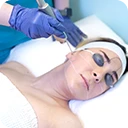
The appointments are usually quick. Many take only a few minutes once the plan is set.
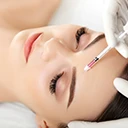
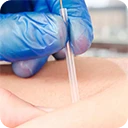
A very fine needle is used, and most people describe the feeling as small pinches or quick stings. It is generally well tolerated. Some clinics use ice, vibration tools, or numbing methods, though many patients do not need much.
There is usually little to no downtime. You might have minor redness, tiny bumps at the injection points for a short time, or occasional bruising. Most people go back to regular daily activities right away.
The biggest surprise for many first-timers is that the result is not instant. Botox takes time.
You may notice early changes in a few days, but fuller results often show up around 1 to 2 weeks after treatment. If you walk out looking exactly the same, that is normal.
How long results last
In most cases, Botox lasts 3 to 6 months.
Why the range? Because people are different. Muscle strength, metabolism, treatment area, dose, and prior treatment history all play a part. Stronger muscles may wear off faster. Smaller doses may fade sooner. Some people simply process it more quickly.
With repeat treatment, some patients find that they can go a bit longer between appointments. Others stay on a fairly regular schedule. There is no universal timeline.
Maintenance is part of the deal. If you like the result and want it to continue, you will need repeat treatments.
Will Botox make you look frozen?
This is probably the most common fear, and it is not irrational. Everyone has seen overtreated faces.
The short answer is no, Botox does not have to make you look frozen. When dosed well and placed precisely, it should preserve natural expression while reducing excess movement that causes unwanted lines.
The frozen look usually comes from too much product, poor placement, or a plan that ignores how the whole face moves together.
A natural result often means you can still look surprised, smile, and frown a bit, just with less intensity in the treated area. Some patients want very little movement. Others want a light touch. Neither preference is wrong, but it needs to be discussed clearly before treatment.
Safety and why injector skill matters
Botox has a long track record and is widely used, but “common” should never be mistaken for “casual.” It is still a medical treatment.
Safety depends on a few things:
- appropriate patient selection
- correct product handling
- precise injection technique
- thoughtful dosing
- good follow-up if needed
This is especially important in people with certain medical conditions, those taking some medications, or anyone who is pregnant or breastfeeding and needs individualized medical advice before proceeding.
Experience matters because the face is not a flat surface. Muscles overlap. Brow position changes the way the forehead should be treated. Jaw anatomy differs a lot. Small differences in placement can change the outcome.
A skilled injector is not just someone who knows where to inject. It is someone who knows when not to.
Who tends to be a good candidate
Botox may be a fit for adults who:
- have dynamic wrinkles they want to soften
- want a non-surgical option
- prefer minimal downtime
- understand that results are temporary
- want subtle improvement, not a completely different face
It may be less suitable for people expecting permanent results, people with certain medical contraindications, or anyone seeking volume restoration when volume loss is actually the main issue.
This is where honest assessment helps. Sometimes the best answer is Botox. Sometimes it is filler. Sometimes it is skincare, sun protection, resurfacing, or simply doing nothing right now.
Questions worth asking before booking
If you’re considering Botox in Vancouver or anywhere else, ask practical questions. Not fancy ones. Practical ones.
Ask:
- What areas do you think would benefit most?
- How much movement will I still have?
- When should I expect to see results?
- How long might my results last?
- What side effects should I watch for?
- Have you treated patients with anatomy similar to mine?
- If I’ve had Botox before, how should this plan differ?
Those questions tend to lead to better conversations than “How many units do I need?” Units matter, but context matters more.
The bottom line
Botox is a well-known treatment for a reason. It can soften dynamic wrinkles, reduce overactive muscle movement, and create a more rested appearance without surgery or a long recovery. It can also help with concerns beyond wrinkles, including excessive sweating and some TMJ-related muscle tension.
Still, the treatment itself is only part of the story. The better question is whether the plan fits your face, your goals, and your comfort level with change.
The best Botox usually does not announce itself. People may notice you look less tired, less tense, maybe a little smoother. They often cannot quite tell why. For most patients, that is the sweet spot.