
































Acupuncture has one of those reputations that makes people curious and skeptical at the same time. For some, it sounds calming and almost obvious: tiny needles, a quiet room, stress relief. For others, it sounds strange, a little intimidating, or too good to be true. I get both reactions.
Part of the confusion comes from the way acupuncture gets talked about. It is sometimes described in very old, philosophical language. Other times it gets sold as a fix for everything under the sun. Neither version is especially helpful if you just want a clear answer to a simple question: what is acupuncture actually like, and what can it realistically help with?
This post is for that question.
If you have been wondering whether acupuncture is painful, whether it actually works, or whether it is only for people who are already “into” alternative wellness, the short answer is this: acupuncture is more practical than most people think. It is commonly used for pain, tension, stress, headaches, and a handful of other issues. It is not magic. It is not a cure-all. But for the right person and the right problem, it can be genuinely useful.
What acupuncture is, in plain language
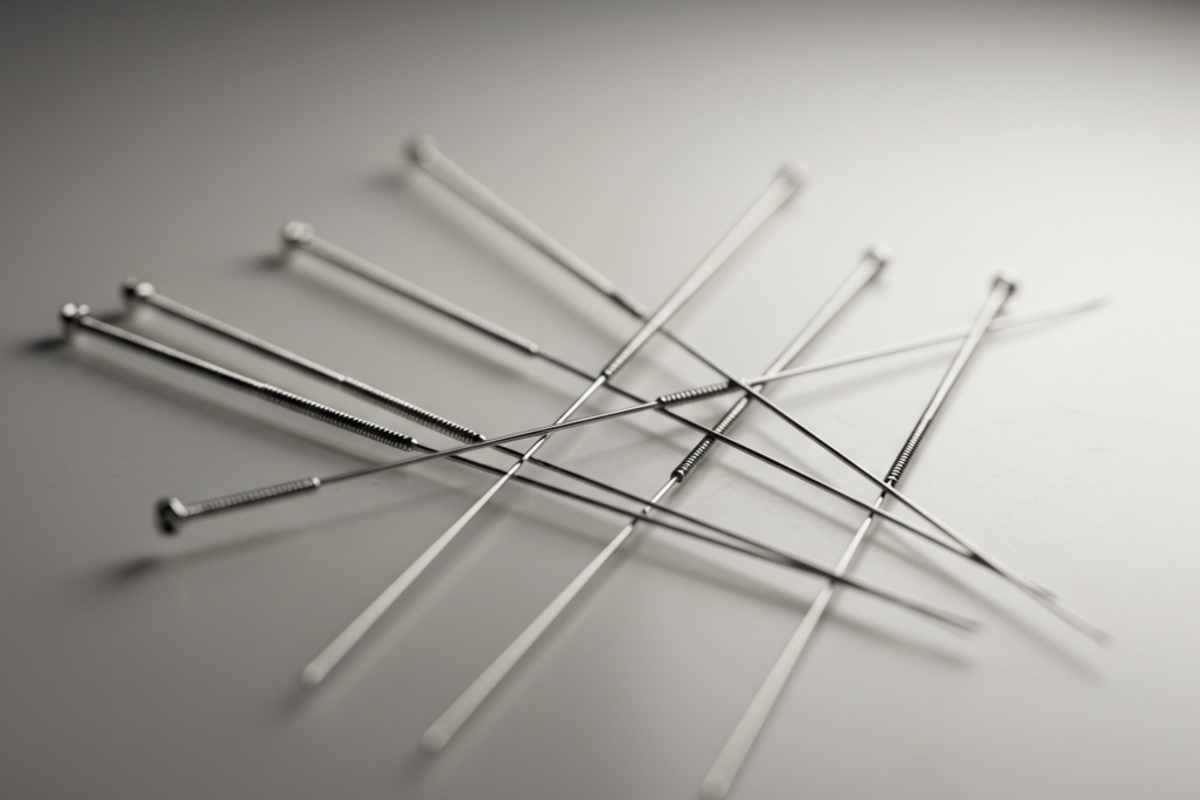
Acupuncture is a treatment that uses very thin, sterile needles placed at specific points on the body. Those points may be on the back, legs, arms, abdomen, scalp, ears, or elsewhere depending on what is being treated.
In traditional Chinese medicine, acupuncture is explained through patterns of balance and flow in the body. In modern medical settings, people often talk about it more practically: needle stimulation may affect nerves, muscles, blood flow, and the release of chemicals involved in pain and stress regulation.
You do not need to pick one explanation and reject the other to understand the experience. What matters to most patients is simpler than that. You go in with a complaint, the practitioner asks a lot of questions, the needles go in, you rest for a while, and afterward you notice whether your body feels different.
That might sound almost underwhelming. Honestly, that is part of acupuncture’s appeal. The session itself is usually quiet, measured, and not dramatic.
Misconception #1: “Acupuncture must hurt a lot”
This is the biggest fear, and it makes sense. If someone says “needles,” your brain probably jumps straight to vaccines, blood draws, or that sharp sting you brace for at the doctor’s office.
Acupuncture needles are not like those needles.
They are much thinner, and most people describe the sensation as mild or surprising rather than painful. You may feel a tiny prick going in. You may also feel warmth, heaviness, tingling, pressure, or a dull ache around a point for a few seconds. Some points are barely noticeable. A few can be more sensitive. Bodies are like that.
The common practical reality is this: acupuncture is usually much less painful than people expect. For many patients, the most uncomfortable part is not the needles. It is the suspense beforehand.
If you are extremely needle-sensitive, tell the practitioner. A good acupuncturist will adjust technique, use fewer needles, or begin gently so your first session does not feel like a trust fall.
Misconception #2: “It’s just placebo”
This claim gets tossed around a lot, usually by people who have never had acupuncture and by people who want one clean answer for every treatment. Real life is messier.
Placebo effects are part of healthcare in general. Expectations, attention, environment, and human interaction all affect how people feel. That is true for acupuncture, physical therapy, medication routines, and even surgery recovery. But that does not mean acupuncture is “just placebo.”
Research on acupuncture is mixed in some areas and more convincing in others. The strongest support is often for pain-related conditions and symptom relief rather than sweeping claims about curing disease. Clinical guidelines in several countries have included acupuncture as a treatment option for some kinds of chronic pain, such as low back pain, tension-type headaches, migraines, neck pain, and osteoarthritis-related knee pain. Acupuncture is also used for nausea, especially postoperative nausea or nausea related to some medical treatments.
That does not mean it works for everyone. It means there is enough evidence and enough real-world use that it deserves more respect than a dismissive eye roll.
A better question than “Is it placebo?” is “For this problem, in this person, does it help enough to matter?” That is how patients actually live.
Misconception #3: “Acupuncture is only for pain”
Pain is the most common reason people try acupuncture, but it is not the only one.
Many people seek acupuncture because their bodies are stuck in a stress loop. They are tense all the time. Their jaw is tight. Their shoulders live somewhere near their ears. They are tired but cannot sleep well. They feel wound up and flattened at the same time, which is a miserable combination.
Acupuncture is often used to support:
-
stress relief and physical tension
-
headaches and migraines
-
neck, shoulder, and back discomfort
-
sleep problems
-
menstrual cramps and cycle-related symptoms
-
nausea
-
recovery support for overworked bodies
I want to be careful here. “Used to support” is not the same as “guaranteed to fix.” If someone has severe insomnia, unexplained weight loss, chest pain, fainting, or major mental health symptoms, they need proper medical evaluation, not a quiet room and needles. But for everyday stress-related symptoms, muscle tightness, recurring headaches, and the wear-and-tear stuff that piles up when life gets busy, acupuncture can be a surprisingly sensible option.
Misconception #4: “You have to believe in it for it to work”
You do not have to arrive spiritually committed. You do not need to speak in whispers about energy. You do not need to become a different kind of person.
Plenty of practical, skeptical people get acupuncture because their neck hurts, their headaches keep returning, or their stress is wrecking their sleep. They are not looking for a belief system. They are looking for relief.
In my experience, people often go in with one eyebrow slightly raised and come out saying some version of, “That was a lot more normal than I expected.”
That is the practical reality of acupuncture. It often feels less mystical and more clinical than people imagine.
What acupuncture may actually help with
This is where hype can get out of hand, so it helps to keep the benefits grounded.
Pain relief
This is the clearest area to start with. Acupuncture is commonly used for chronic low back pain, neck tension, knee pain, shoulder discomfort, and some forms of arthritis-related pain. It is also used for tension headaches and migraines.
Why might it help? Needle stimulation may influence how the nervous system processes pain, relax tight muscles, and encourage local circulation. That does not mean pain vanishes forever after one visit. More often, people notice a change in intensity, frequency, recovery time, or stiffness. Those changes matter. If you have been living at a pain level that drains your patience and energy, even a modest reduction feels significant.
Stress and nervous system regulation
This benefit is harder to measure neatly, but people talk about it all the time because they feel it. A good acupuncture session can leave you feeling deeply settled, almost like your body finally got the memo that it is allowed to stop bracing.
That does not mean acupuncture erases stress from your life. Bills still exist. Traffic still exists. Your phone will still light up. But it may help shift the physical side of stress, the racing thoughts, shallow breathing, tight chest, clenched jaw, tense shoulders, and restless sleep that make everything worse.
For some people, that downshift is the main reason they return.
Headaches and migraines
If you get headaches often, you already know how disruptive they are. Acupuncture is used by many people who want help with tension headaches or migraines, either alone or alongside other medical care.
The goal is often not “never get a headache again.” It is more realistic than that. Fewer headaches. Less severe headaches. Shorter headaches. Less need to white-knuckle through the day. Those are meaningful outcomes.
Sleep support
This one tends to overlap with stress and pain. If your sleep is poor because your body is uncomfortable, or because your nervous system feels permanently switched on, acupuncture may help you relax enough to sleep more deeply.
It is not a sedative. It is not a substitute for dealing with sleep apnea, medication side effects, or serious sleep disorders. But for people whose sleep is getting chipped away by tension, worry, or physical discomfort, acupuncture can be part of a broader plan that finally makes rest feel possible again.
Menstrual discomfort and cycle-related symptoms
Some people use acupuncture for menstrual cramps, pelvic tension, bloating, and mood changes tied to the menstrual cycle. It is also used as supportive care in some fertility settings, though that area gets oversimplified online and deserves honest expectations.
The useful middle ground is this: acupuncture may help with symptom management for some people. It is worth discussing if your periods are hard on your body, but severe pain, very heavy bleeding, or sudden changes still need medical assessment.
Nausea and general recovery support
Acupuncture, and especially acupressure at certain wrist points, has been used for nausea in several settings. Some people also find it helpful during periods of recovery when they feel run down, tense, or out of sync after illness, overtraining, or prolonged stress.
Again, this is support, not miracle work. Still, support counts.
What a first acupuncture appointment usually feels like
The first visit is usually more talk than people expect. A practitioner may ask about your main complaint, sleep, digestion, stress, energy, medical history, medications, and patterns in your symptoms. That can feel a little broader than a standard medical intake, but it helps them tailor treatment.
Then comes the treatment itself.
You usually lie on a treatment table. Needles are placed in selected points and left in for a short period while you rest. Some sessions also include heat, gentle electrical stimulation, cupping, or pressure techniques, depending on the plan and your comfort level.
A few things often surprise first-timers:
-
The room is usually quiet.
-
You do not feel every needle the same way.
-
You may get deeply relaxed, even sleepy.
-
You might stand up afterward feeling lighter, looser, or a little spaced out for a few minutes.
That last part is normal for many people. Drinking water and giving yourself a bit of transition time after the session is usually a good idea.
How many sessions does acupuncture take?
This is one of the least satisfying answers in healthcare: it depends.
If you slept awkwardly and your neck suddenly seized up, you might feel relief quickly. If you have had chronic pain for five years, your body usually needs more than one visit to change patterns that old.
Acupuncture often works more like a course of care than a single event. Some people notice a difference after one session. Others notice change after several. Improvement may come in layers: pain eases first, then sleep gets better, then tension becomes less constant.
Be cautious with anyone who promises a cure in one visit. Be equally cautious with anyone who pushes endless treatment without a clear plan. Good care usually includes honest discussion about goals, timelines, and whether the treatment is actually helping.
Safety matters more than ambiance
Acupuncture is generally safe when performed by a properly trained, licensed practitioner using sterile single-use needles. That sentence matters more than any soft music in the room.
Ask practical questions. Is the practitioner licensed where you live? Do they use single-use disposable needles? Do they ask about medications, pregnancy, bleeding disorders, pacemakers, or medical conditions that might affect treatment?
Mild side effects can happen. A little soreness, a small bruise, temporary fatigue, or lightheadedness is not unusual. Serious complications are uncommon, but that is exactly why training and proper technique matter.
You should also know when acupuncture is not the first stop. If you have sudden severe pain, signs of infection, neurological symptoms, chest pain, trouble breathing, or any urgent medical issue, get medical care first.
Who tends to like acupuncture most?
There is no single type of acupuncture patient, but a few groups show up again and again.
People with chronic tension often like it because their bodies feel constantly overengaged and acupuncture gives them a rare sense of release.
People with recurring pain often like it because they want another option, especially when they are tired of relying only on medication or when they want support alongside physical therapy, exercise, or medical treatment.
Busy people like it too, which is slightly funny because they are often the same people who claim they “can’t relax.” Then they lie down for twenty minutes and wake up wondering where they went.
How to get more out of acupuncture
Acupuncture is not a contest in passivity. You do not have to do much during the session, but it helps to treat it as part of a bigger picture.
Show up having eaten something light if you tend to get faint on an empty stomach. Wear loose clothing. Be honest about your symptoms instead of trying to sound tough. Notice what changes after the appointment, including energy, sleep, pain levels, mood, and tension.
And maybe most important, give yourself realistic expectations. Acupuncture can help, sometimes a lot. It can also be one useful piece of care rather than the whole answer. That is not a disappointment. That is how most good healthcare works.
The bottom line on acupuncture
Acupuncture has been buried under two unhelpful extremes: overblown promises and instant dismissal. The truth is less dramatic and more useful.
It is a treatment that many people use for pain, tension, headaches, stress, sleep problems, nausea, and general symptom support. It is usually far less painful than people expect. It does not require belief. It does require a qualified practitioner, sensible expectations, and a willingness to pay attention to how your body responds.
If you have been curious but unsure, that hesitation is reasonable. New treatments can feel strange before they feel familiar. Still, acupuncture is one of those things that often makes more sense once you stop arguing with the idea of it and simply learn what it is in real life.
Quiet room. Thin needles. Careful assessment. A body that, sometimes, finally softens. That is acupuncture more often than not.